COMPASSION AND GENEROSITY TOWARD THE SUFFERING

This story by Eric Debode, fellow Catholic Worker is dedicated to the homeless residents of SAFE PARK and Councilman Steve Kozachik and his colleagues on the City Council, for NOT ACCEPTING THE STATUS QUO and instead trying to find short and long term solutions to inequality and human suffering on the mean streets of Tucson and America.

 CW


HALF MOON BAY CATHOLIC WORKER

COMPASSION AND GENEROSITY TOWARD THE SUFFERING
February 2015

 by ERIC DEBODE

On Christmas Eve morning one of our regular guests, Madelia, called me to tell me that she had been in the hospital the night before and was very sick. She would not be able to come in for breakfast and pick up the gifts we had collected for her three young children. But her husband, who had been laid off as a gardener at the golf course could stop by before 10am if we would still be there. I told her I would wait for him. I hung up the phone, and just then a supporter came by with a box full of ham, turkey, potatoes, salad, vegetables and all the “fixins” for a fabulous Christmas dinner. I knew immediately it had to go to Madelia, who wasn’t well enough to cook.

Our life is a great gift, and accompanying people on the margins sometimes gives us the blessing of seeing when generosity meets needs, people get loved, and the Kingdom we hope for peeks through for a moment

The Catholic Worker is a movement of accompaniment of those who struggle. Wherever we are, whatever city or town, we can always find the latest manifestation of the cross whether in homelessness, lack of affordable housing, health care needs, worker’s rights, peacemaking or restorative justice work.

“Do not be afraid,” says Jesus, over and over. Take courage (have heart!) and be open to the Spirit of Life which is about personal, self-sacrificing service to people in need, the struggling families, homeless poor, sick veterans, and frightened immigrants.

Have Compassion and be Generous toward the Suffering.

I think that sums up the best of just about any religion. It surely entails a prayer-filled spiritual life; the deep desire only to dwell in the presence of our God. It also calls us to relationship, to “hear the cry of the poor,” and respond. We must “Stay Awake!” And we must also act. The public ministry of Jesus was action-packed. There were healings, preachings, and forgivings…all peppered with a forceful challenge to religious leaders to stop wasting time monitoring purity and worthiness, and making people feel like they are less than a wondrous child of God.

“Jesus looked on him, and loved him.” Like a good pastor, he fell in love with the people, rich and poor alike. But that didn’t mean he endorsed the status quo. No, compassion and generosity toward the suffering means asking when having enough stuff is enough stuff. It doesn’t mean asking how we, as a community, can let people live in tents in our city. It means asking how I can let people live in tents in our city. “How will I respond to the suffering in my midst?”

St. Ignatius used to encourage those who pray to do an ‘examination of the senses” while meditating on a scripture passage. For example, if the scripture was about the Nativity, he would ask us to smell the manger’s stinky animal smells, feel the cold, and hear the sounds of sheep and goats in their pens or fields. This way of entering the scene with our whole body enriches the prayerful experience, and opens us up to “be present” in an old story. We must also be present to today’s story.

If you haven’t already, I invite you to walk behind Safeway, or under the bridge along Cabrillo Hwy. just South of Burger King, or come to our free community breakfast. Take in the sensual experience of the cold, wet air, the noisy highway that people sleep underneath, and the smells. Then, go to a quiet place to pray. Perhaps a feeling will well up within you, first of gratitude, maybe some guilt, but finally an overwhelming desire to help usher in that “Kingdom of God,” and the compassion and generosity that Jesus exemplified. Recall the stories and parable-teachings, finally understand why Jesus was so impatient with the religious hierarchy. Go forth, heal, be generous, let go of what “has a hold” on you, and trust in the abundant graces of our loving God. Peace.

BLAMING IT ALL ON THE POOR PEOPLE…

HL

Humberto Lopez Owner of Hotel and HSL Properties

Hotel 2

Hotel Downtown

HSL 

By Brian Flagg,

I just got my new National Catholic Reporter (2-27-2015) and was enjoying the front page article about how Pope Francis challenged the hell out of 160 cardinals from around the world during a homily at a Mass on February 15.

He told them that the credibility of the Church rests entirely on how Christians serve those marginalized by society.

“Dear brothers”, Francis told the cardinals, “I urge you to serve the church in such a way that Christians – edified by our witness – will not be tempted to turn to Jesus without turning to the outcast.”

“We will not find the Lord unless we truly accept the marginalized,” the Pope exhorted. “Truly the Gospel of the marginalized is where our credibility is at stake, is found and is revealed.”

He also told them to “respond immediately” to those left most in need by society.

You might have heard it said that all politics is local? Well I feel that all religion is local. So how does the Holy Father challenge us here locally in Tucson regarding the most marginalized and excluded?

It seems pretty obvious to me.

Homeless people, aided by a ruling from a Federal Judge, have set up a camp in Pancho Villa Park in downtown Tucson. Their presence seems to be a negative thing to everyone dedicated to making lots of money off the new gentrified Downtown. Business owners, politicos, the newspaper and many others are seeking to vilify those who are certainly among the most marginalized in our midst.

The Daily Star has tried to cast the homeless camps in a negative light for not responding to services offered them by social agencies. These so-called services offered are largely fantasy – Anyone who is poor and/or homeless knows that the available services serve only a very small fraction of those in need.

I feel that it all comes down to human dignity.

Taking some first steps towards standing for the dignity of the homeless should not be that difficult.

If one listens to what the denizens of Safe Park are saying, it seems that all they are asking for is a piece of land to temporarily sleep on with maybe some porta potties and a portable shower. Surely between the public and private sectors they can figure out something like that, just like it has been done in other cities.

Or maybe Humberto Lopez could cut a deal to open that huge multi-storied empty hotel he owns that looks down on all the campers?

Who is more culpable in this situation? The likes of the guy who owns the humongous empty hotel or the human beings that wake up in their wretched little dream pods every morning in the shade of that empty hotel?

What would the Holy Father say?

I think he already said it to the cardinals on February 15.


GUEST SPEAKER AT SAN DIEGO STATE UNIVERSITY

san-diego-web-1024x619 By: Gilberto Contreras

I have been honored by a professor in the gender and women’s studies department of San Diego State University to speak in his graduate class about my involvement in the Raza Studies Movement.

Being a gender and women’s studies class, many of my favorite feminist activist authors are talked about.

The ideas of Gloria Anzaldua, Audre Lorde, and Cherrie Moraga supplied the content for this class.

Theory in the Flesh was the main topic from last Friday.

Theory in the Flesh, coined by Cherrie Moraga states “A theory in the flesh means one where the physical realities of our lives-our skin color, the land or concrete we grew up on, our sexual longings-all fuse to create a politic born out of necessity…”

This means that our past shaped the activist, the passion, the drive that we have as humans.

The group of students were stumbling over each other to speak about this topic. This group had ten students and more than half are of color.

Once the conversation began, what I enjoyed most was that many of the students began to speak about their upbringing. Most of the students were born and raised in San Diego or California.

There was one story stuck with me. One student spoke about her upbringing in Tijuana and how she moved to San Diego after middle school because of her parent’s desire for her receiving a quality education. She stated that she connected with Theory in the Flesh differently than the other students. She said that ‘this is why this theory is not one sided, we can share similar backgrounds but have different stories, but while also having the same passion for equality’

That quote from her was the one thing that I wanted a student to get. I want people to understand that because we might share the same skin tone, or childhood barrios, or the same tongue, we should not assume we share same views.

We can be fighting for the same outcome, equality, diversity, voice, knowledge, but the way we move forward can look different. We as a community have to be aware of different ways of succeeding and being open to the opinions of allies.

There will be many hit and misses, but an open mind to new ways is necessary for people to develop a higher consciousness.

HUGO CHAVEZ

Hugo

By Brian Flagg,

I/we don’t have a Catholic Worker job description that details how we go about a practice of faithful discipleship, one that moves in the direction of the spiritual and material liberation of those whom we serve every day.

So we have to be creative.

And we have to be inspired.

One day a couple of years ago I had a flash of enlightenment. I realized that what I really wanted was not Pima County Interfaith Council organizers, but serious, dedicated revolutionaries.

The organizers here, Jimmy Ojeda, Cesar Aguirre and now Gilberto Contreras have generally agreed with this sentiment. What followed has been a series of experiments meant to be small initial steps towards the liberation of our people. These have included things like the Bus Riders Union membership campaign to avoid bus fare increases, organizing to keep public schools open and thriving and together as a larger community, studying the Joy of the Gospel, by Pope Francis.

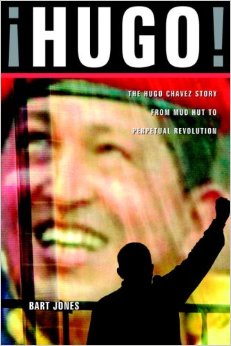
Now so as to be more inspired, we at Casa Maria have embarked on reading together “The Hugo Chavez Story: From Mud Hut to Perpetual Revolution”, by Bart Jones.

As a young man in the Venezuelan military Chavez visited Venezuelan cities where he experienced, “little ones with tremendous sadness, with bloated bellies, without doubt full of parasites from eating dirt, barefoot, nude. With a scene like that , I feel the blood boil in my veins, and I convince myself of the need to do something, whatever it may be, for those people.” (Jones, p.50)

He also lamented “how other young men his age probably were living it up in discothèques. “If they knew what we are doing they would say we are crazy,” Chavez wrote. “But I am not crazy. I know very well what I am looking for and what I am doing and why I am sacrificing myself.” (Jones, p.50)

Maybe Catholics and Christians owe it to themselves to check this guy out because his life of self-sacrifice for and with poor people tends to put most of them to shame.

We are discussing it 5 chapters at a time on Friday evenings. It’s exciting and relatively easy to read. We have some extra books if anyone is interested.


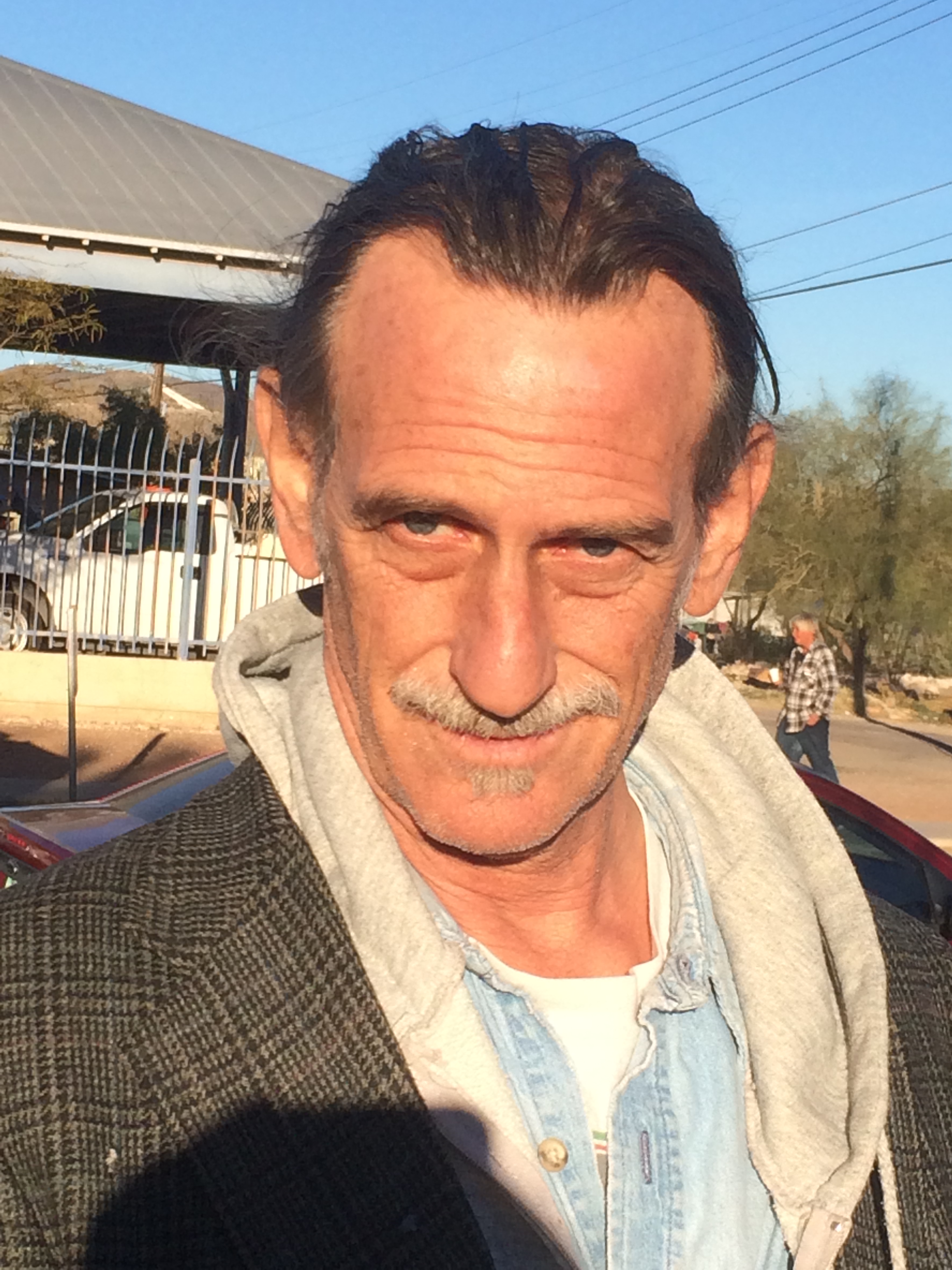
I turned 60 on Monday, February 16

Brian FlaggcochiseCochise 1

By Brian Flagg,

It really pissed me off, for weeks leading up to the day.

I successfully avoided celebrations and instead went by myself to camp and read and walk into Cochise Stronghold in the Dragoon Mountains east of Benson.

It was the most perfect and most sacred place I could go to.

I spent time reading about and reflecting with Cochise, Fr. Jon Sobrino and Fr. Ignacio Ellacuria, Hugo Chavez and Simon Bolivar, St. Ignatius and of course mi novia, Jesus!

The first reading from the mass on my birthday was from Genesis 4, the story of Cain and Abel. After Cain killed his brother Abel, God said to Cain, “Can’t you hear how the blood of your brother is crying out to me from the earth?” As I walked through those incredibly beautiful and colorful rock formations of Cochise Stronghold, I couldn’t help but think and experience the same about the blood of the Chiricahua Apaches, who called those mountains home from the late 1700’s until the late 1800’s, when the U.S. government conquered them and forcibly removed them from their land. Cochise and his people were famous for holding out and evading capture longer than all the other tribes due to their intimate knowledge of those mountains. This is but one very sad and brutal story of the genocide of the Native American people.

Over the two days I spent there I received inspiration and grace to get beyond my own petty and self absorbed feelings.

My trip to the Stronghold was really quite mystical and I realized that I was not alone. The presence of the Creator God was there, showering me with forgiveness and love and the desire to be part of a struggle for justice that can somehow right the wrongs of my Anglo ancestors. Fr. Ellacuria, one of the Jesuit martyrs of El Salvador, always insisted that we as a Catholic Christian people have to “reverse, subvert and launch history in another direction.”

That is what I want to be part of!

So yeah, I’m pretty old and I can no longer play basketball because of my knees, but so what, the Struggle continues! And I pray to God that I can live a life poured out as a joyful human sacrifice in the struggle. ANIMO!


Bravo to TUSD Board Member Kristel Foster

th

By Brian Flagg,

Bravo to TUSD Board Member Kristel Foster for her heartfelt, courageous and confrontational (in an extremely positive way) letter to the editor (Star, 2-15-2015).

http://tucson.com/news/opinion/mailbag/letters-to-the-editor/article_6e9438b4-70b6-5639-be2b-25a171936fb5.html

If you missed it, she calls out fellow board member Mike Hicks for his support of SB1371, which would eliminate $64 from the district.

He isn’t the only one seeking to put down TUSD and destroy public education.

May Kristel Fosters’ willingness to speak out help to transform us all into spirit warriors in defense of public education.

THE REGGIO EMILIA APPROACH AND WHAT THE RESEARCH SUPPORTS

Special thanks to the Tucson Children’s Project, Mimi Gray, Pauline Baker, Ben Mardel, Teresa Acevedo, and especially Lella Gandini of Reggio Emilia, Italy for making this all possible.

lella

by Cesar Aguirre

As an avid supporter of public education and an extremely involved parent at Ochoa Elementary, I have done a lot of research and studied best practices of early childhood education.

Over the weekend the Tucson Children’s Project held a conference titled “What the Research Supports”. I was in attendance, along with many dedicated teachers from Ochoa. Ochoa is a Reggio Inspired Magnet school. It’s the only public school of it’s kind in the country. The Reggio approach is a Socratic style teaching philosophy, developed in Reggio Emilia, Italy, that focuses on the image of the whole child. This idea in itself is a huge conflict in public education today, where students and teachers are assessed only by a snapshot of the students work and learning abilities in specific areas of study. You would think that Ochoa’s B rating two years in a row would be sufficient, but one of the greatest hurdles faced is how to show evidence (data) that this philosophy is successful in creating critical thinkers that perform higher on standardized tests without teaching to the test through rote memorization.

ben m

Since the Reggio Philosophy is new to the American public school system there is virtually no data available, but Ben Mardel has been doing just that, collecting the data. Data seems to be the only concern of politicians and bureaucrats who profit from the policies made regarding public education. When it comes to policy that affects children we should first consider what is best for the child, then the data. If the data leads to practices that hurt children then why implement them?

One of the first things Ben did was to challenge us to think about what the purpose of education is. For me, as a parent, I don’t want my kids to receive an education that prepares them for the work force and creates a docile worker that can follow instructions and conform to the world around them. I want my kids to receive an education that challenges them to think critically and question everything. An education that prepares them for life, not just the work force, incorporating the arts and local history, and celebrating diversity and culture, while creating a democratic citizen that is involved in his/her community. In this way education is the foundation of democracy and the main reason public education was created in America. Now it is being used as a tool to dumb down the population and make sure they conform to the mold set by the powers that be.

I want to leave you all with the question that was presented to me on the first day of the conference. When thinking about the purpose of public education and creating an involved democratic student, is standardized testing a productive or counter-productive tool for teaching and assessing?

A LITTLE INSPIRATION FROM…

Pedro

A LITTLE INSPIRATION FROM…

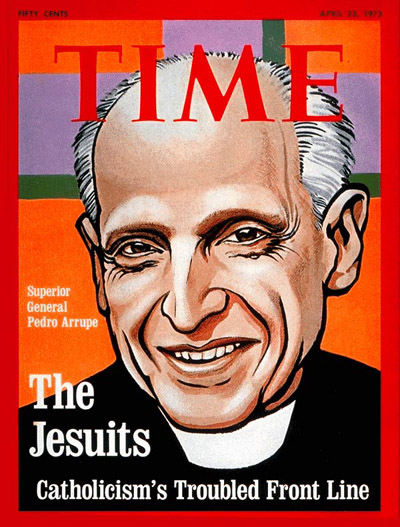
Pedro Arrupe

Superior General of the Society of Jesus (1907-1991)

Pedro Arrupe, who was elected Superior General of the Jesuits in 1965, oversaw a renewal of the Society so profound that he is revered by many Jesuits as a “second founder.” Specifically, he was instrumental in defining the modern mission of the Jesuits in terms of “faith that does justice.”

Arrupe’s sense of solidarity with a suffering world had roots in his early years as a priest. Assigned to Japan in 1936, he was serving only four miles from the center of Hiroshima on August 6, 1945, when he was nearly blinded by the flash of the first atomic bomb. The memory of that day and of the survivors whom he tended was present to him in each Mass he celebrated for the rest of his life.

His compassion developed over time into a conviction that ministry to oppressed and suffering peoples must not remain on the personal level alone, but should also promote structural changes in the world. Under his leadership Jesuits around the world took up the promotion of justice as an essential aspect of evangelization.

In 1981 Arrupe suffered a disabling stroke. He spent his final years mute and dependent of others. Now, after years of prophetic leadership, he served God through prayer and patient suffering. Thus he exemplified the Ignatian discipline of “finding God in all things.” He died on February 5, 1991.

 “More than ever I find myself in the hands of God. This is what I have wanted all my life from my youth. But now there is a difference; the initiative is entirely with God.”

-Pedro Arrupe, SJ, after suffering a stroke

Thanks to Msgr. Tom Cahalane for passing this onto us.

A LETTER TO SYLVIA CAMPOY

Campoy

 February 10, 2015

Dear Sylvia,

Thanks for coming to Casa Maria.

I think we fundamentally disagree with you on some main themes, but talking with you and Terry Higuera really helped us think about desegregation and how we as parents and the larger community can move forward to advocate and organize for a more just TUSD. Ultimately it’s all about better educated kids.

We understand that no matter what is just or unjust, right or wrong, there is a court order that exists. But it is only a court order, not a commandment that came down from heaven.

We would like you to do whatever you can so that the $63 million a year in desegregation (or whatever the exact number is) goes towards having strong effective magnet schools in areas suffering from poverty, no matter how integrated the schools are.

We sincerely believe that it is not possible or realistic to expect all these schools to become integrated.

There are simply not enough white kids.

Equity in schools, equity in academic achievement District-wide is our priority.

Trying to write grants or beg the District to shift Maintenance and Operations funds around to accomplish this, feels unacceptable to us.

However, we did hear what you suggested regarding “good faith efforts” at integrating our magnet schools, and we are contemplating how we could accomplish this, especially in regards to our participation in developing the comprehensive magnet program plan for Ochoa.

We also liked your input on Charter schools and how we might aggressively battle them for students, so as to increase integration and make public education better for the children.

Thanks for adding us to your list and we look forward in collaborating with you in the future.

Brian Flagg, James Ojeda, Cesar Aguirre, and Gilberto Contreras

A Safe Place to Dream 24 hours a day

Pod

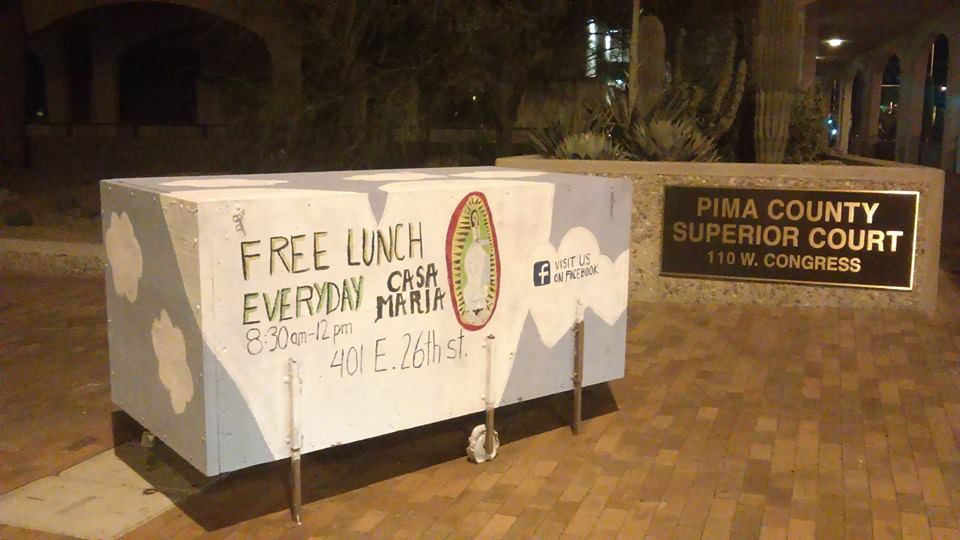
Casa Maria supports all people having a place to sleep at night.

Casa Maria supports SAFEPARK which is located downtown in Pancho Villa Park.

John McLane is a founder of SAFEPARK and a friend of Casa Maria.

_______________________________

A Safe Place to Dream 24 hours a day

By John McLane,

Three years ago, a group of ‘homeless activists’ with the group Occupy Public Land​ set out to decriminalize homelessness in the City of Tucson and during that effort fill in the gaps in services for both the houseless population and those wishing to express their rights and redress their grievances.

With a Preliminary Injunction ordered by 7th District Court Judge Bury, this goal is now a reality;

The City believes that as a matter of law, a person cannot engage in expressive conduct on a continuous basis. “At some point, a person has to put down a picket sign and eat, sleep, think, rest use a restroom, talk to a friend, or play; and these activities are not traditional expressive conduct.” (Resp. (Doc. 71) at 7.) The City is wrong.”

The basic needs that we have seen are not only necessary for survival, but necessary to ensure people have the ability to pursue happiness as they see fit. We have thankfully been able to provide shelter to over 30 people so far in a #DreamPod, a place for people to bring material donations, and a safe place to exist without fear of harassment.

The key gaps that we have distinguished in 3 years of research are; 1. There are no couples or pet shelters in the city. 2. Minimal amount of shelter beds, and extraordinary restrictions. 3. No Public 24 hour bathrooms. 4. No 24 hour location to protest in the City. 5. Finding food can be an all day job, and too few options. 6. Services are spread out around the city, and many have trouble getting to them. 7. Lack of community connection between the houseless population and housed.

In launching our #PeoplesParkway program we aspire to address each of these gaps one by one, and at one central location in the heart of the City of Tucson.

Our current residents of #SafePark take shifts in monitoring the area as well as cleaning up the park and surrounding area. As we further develop the program and area we will as well host a welcome tent with literature and an activity board, donation center, homeless services resource center, arts and crafts workshop and canopy, and dozens of other programs to keep people engaged and on the track to learning skills, and creating a job for themselves.