Message from a Bus Rider, V1

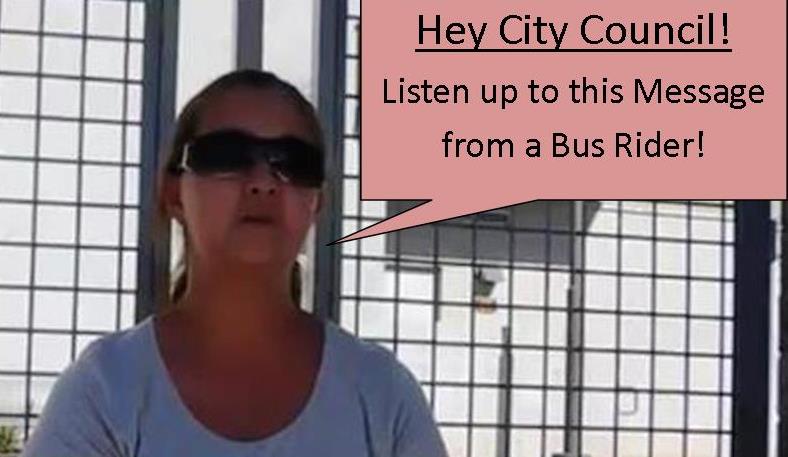
As we lead up to the decision by Tucson’s City Council on whether and how to raise bus fares on September 20, TBRU will publish a Video Blog everyday. We know that if our City Council Members would come to the transit centers and talk to bus riders or get on the bus that they would think differently about how to best manage and grow our transit system.

Our first Video Blog comes from Arminda.

Please watch it, share this blog post and make a call to Mayor and Council urging them to not raise the fares.

791-4201 Mayor Rothschild
791-4040 Regina Romero
791-4687 Paul Cunningham
791-4711  Karin Uhlich
791-3199  Shirley Scott
791-4231  Richard Fimbres
791-4601 Steve Kozachik

Mientras esperamos la decisión del Consejo de la Ciudad acerca de los precios de los camiones en Septiembre 20, TBRU publicara un video todos los días, sabemos que si los Miembros del Consejo vinieran al centro donde están los camiones y hablaran con los pasajeros o se subieran al camión ellos pensarían diferente acerca de como mejorar el sistema de tránsito.

El primer video es de Arminda.

Por favor mírelo, comparta el video y llame al Alcalde y al Consejo y pídales que no aumenten los precios de los camiones.

791-4201 Mayor Rothschild
791-4040 Regina Romero
791-4687 Paul Cunningham
791-4711  Karin Uhlich
791-3199  Shirley Scott
791-4231  Richard Fimbres
791-4601 Steve Kozachik


An Open Letter to Tucson’s City Council

DSCN0326September 1, 2016

An Open Letter to Mayor Jonathan Rothschild, Council Members Regina Romero, Paul Cunningham, Karen Uhlich, Shirley Scott, Richard Fimbres and Steve Kozachik,


Dear friends,

I write this with a heavy heart. Your support of bus issues and defense of poor people over the years has been most appreciated.

If you now choose to raise bus fares it will be an attack on poor folk and the planet too.

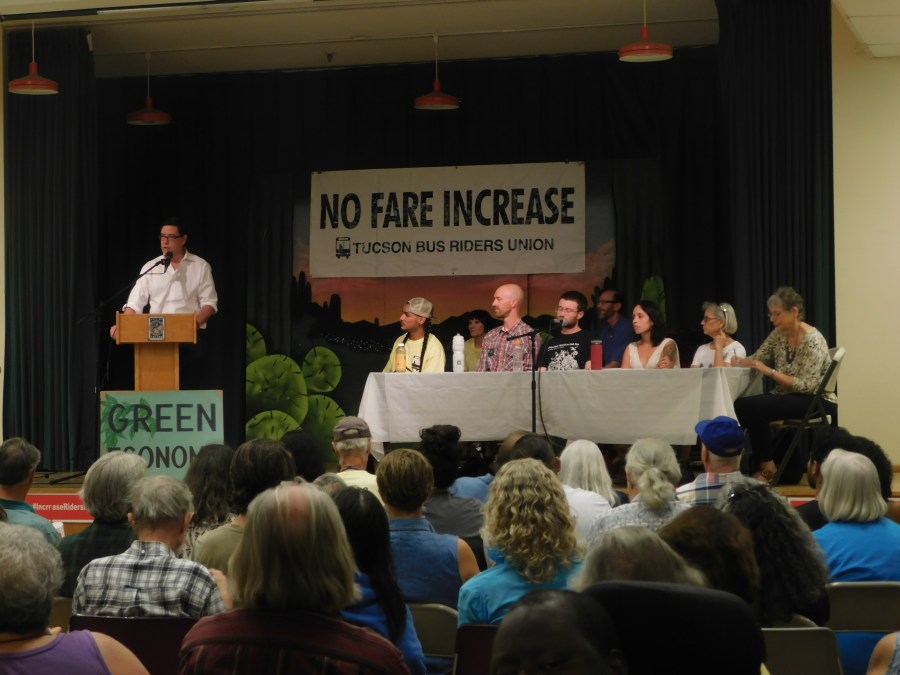
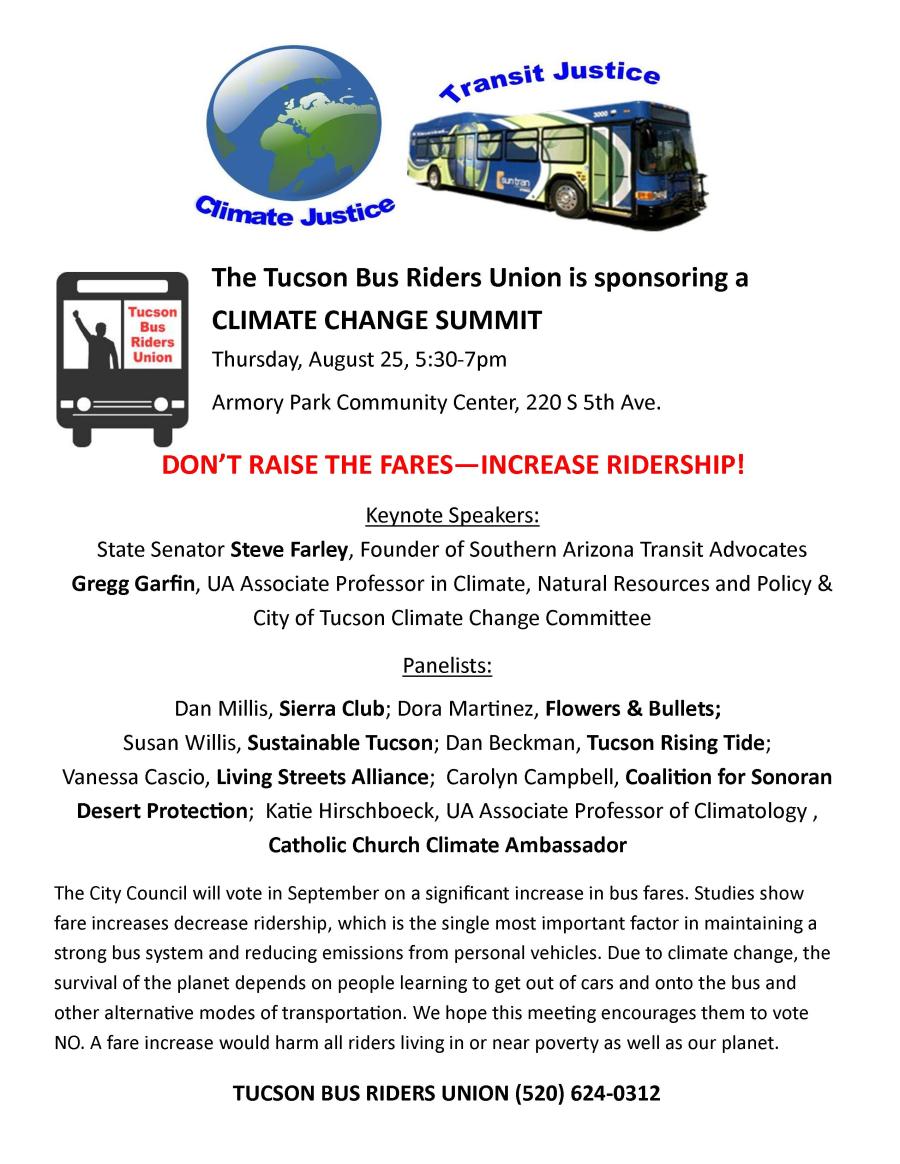
In recent months, the Bus Riders Union has successfully been making the connection between climate change and the dire need for a highly functional transit system that increases ridership and can move more and more [people out of their polluting cars and on to the bus. Two hundred and forty people attended our August 25 Climate Change Summit. The keynote speakers were State Senator Steve Farley and Gregg Garfin, a climate change scientist from the University of Arizona who also served on the City’s Climate Change Committee.

Many people that make up your base are beginning to understand this connection and want to act on it. The cop union, Republicans and other assorted conservatives won’t respect you or vote for you for raising fares. Most of them don’t even live in the City. Instead you will look bad with your base and will expose yourselves to challenges to your political careers from the large number of people that support a Bernie Sanders / Raul Grijalva-type of agenda, the kind of bold, progressive agenda that could win elections in Democratic bastions such as the City of Tucson.

In the interest of bus riders living in or near poverty, the more fragile than ever environment and your own spiritual well-being and political careers, please vote NO to fare increases.


Thank you,

Brian Flagg
520-624-0312

CELEBRACION DE LA SANTA MISA EN CASA MARIA LOS LUNES A LAS 10:00 AM // CELEBRATE THE HOLY MASS AT CASA MARIA ON MONDAYS AT 10:00 am

por Alicia Nuñez

Hola mi nombre es Alicia, vivo y trabajo en Casa María ¡Me encanta mi Trabajo!

Soy católica, pertenezco a la Orden del Carmelo Seglar en Santa Cruz y me gusta asistir a la Santa Misa los Sábados, Domingos y las veces que se pueda durante la semana como todo buen católico.

Una de las muchas bendiciones que he recibido aquí en Casa María es poder asistir a la Santa Misa los lunes como parte de mi trabajo – más que un trabajo es un PLACER ir mass5los lunes a participar en la Santa Misa y servir al prójimo.

Todos los Lunes a las 10:00 am tenemos Misa aquí en Casa María, son diferentes sacerdotes
cada semana. El primer lunesmass2 del mes es P. Jim Hobert,
Pastor de Sacred Heart Parish. El segundo lunes del mes es el Mons. Tom Cahalane. El tercer generalmente es el P. David Guzman, O.C.D.S, Pastor de Santa Cruz y el quarto es P. Tom Tureman, Pastor de Most Holy Trinity.
20160829_101918_HDR

Asisten a la misa; voluntarios, amistades, familiares, compañeros de trabajo, homeless e invitados especiales que quieren ayudar a nuestra comunidad con sus servicios.

¡Están cordialmente invitados!

Además es una manera de enterarte que está pasando en la comunidad y como puedes ayudar.


CELEBRATE THE HOLY MASS AT CASA MARIA ON MONDAYS AT 10:00 am

by Alicia Nuñez

Hello my name is Alicia. I live and work at Casa Maria. I love my job!

I’m Catholic. I belong to the Secular Order of Discalced Carmelites and I like to attend the Holy Mass on Saturdays and Sundays, and during the week when I’m able to, just like any good catholic.

One of the many blessings I have received here at Casa Maria is to be able to attend Mass on Mondays as part of my job. More than a job, it’s a pleasure to participate in the Holy Mass and serve others.

Every Monday at 10:00 am we hold Mass here at Casa Maria. There’s different priests each week. The first Monday of the month is Fr. Jim Hobert, Pastor of Sacred Heart Parish. The second Monday is Msgr. Tom Cahalane. The third is usually Fr. David Guzman, O.C.D.S. Pastor at Santa Cruz Catholic Church and the fourth is Fr. Tom Tureman, Pastor, Most Holy Trinity Catholic Church.

In attendance are; volunteers, friends, family, coworkers, homeless and special guests who want to help and serve the community.

20160829_101445_HDR
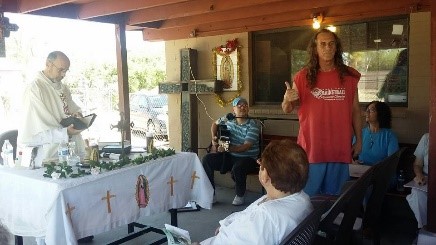
TUSD Governing Board member and incumbent candidate Cam Juarez (far left) joins us in celebrating mass with Fr. Tom Tureman, Pastor, Most Holy Trinity Catholic Church-8/29/16

You are cordially invited!

It’s also a way to find out what’s going on in the community and how you can help.

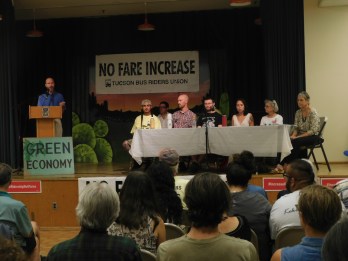
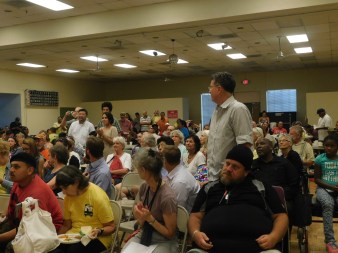
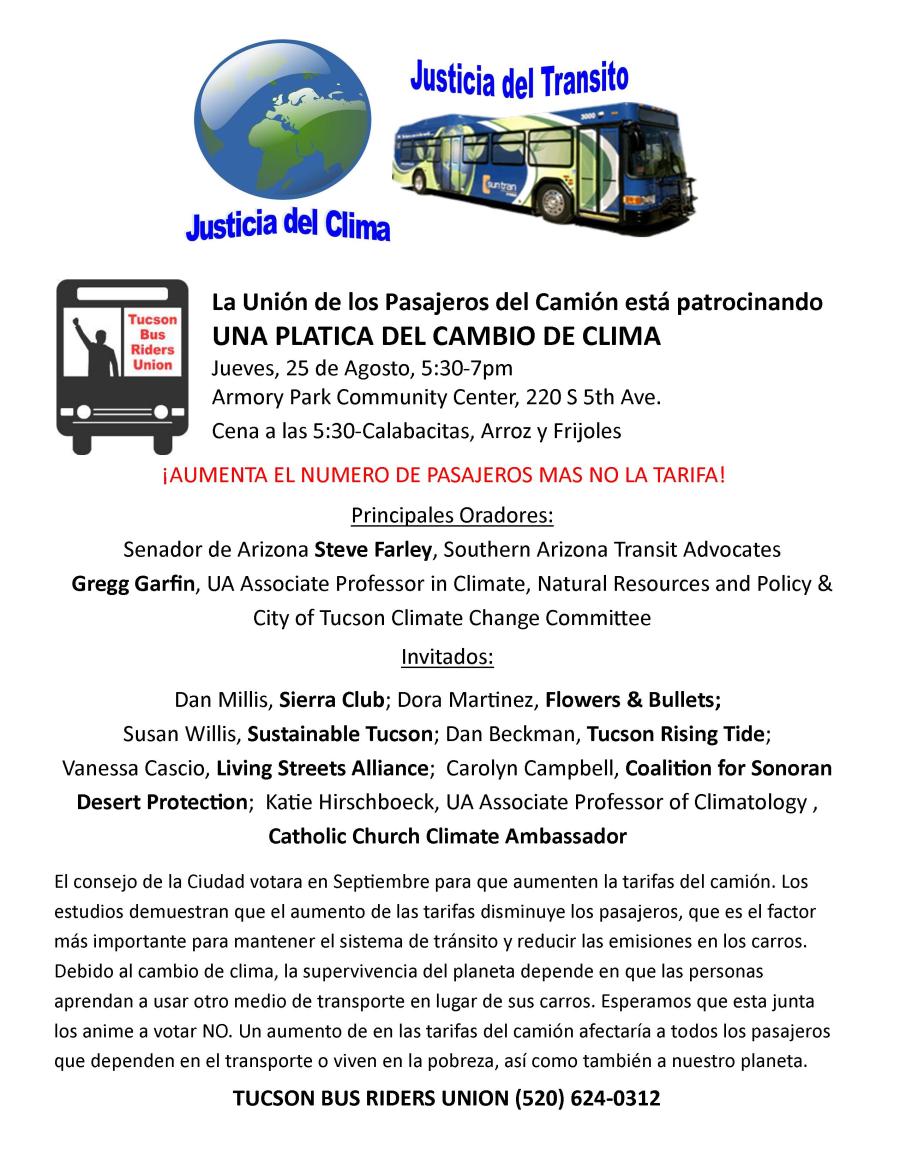
THANKS TO ALL WHO CAME OUT TO LAST NIGHT’S CLIMATE CHANGE SUMMIT SPONSORED BY THE BUS RIDERS UNION (and City Council members please take note!). 240 PEOPLE ATTENDED! // GRACIAS A TODOS LOS QUE ASISTIERON A LA JUNTA DE CAMBIO DE CLIMA PATROCINADO POR LA UNION DE LOS PASAJEROS DEL CAMIÓN (¡y Los Miembros del Consejo de la Ciudad tomen nota!). ¡ASISTIERON 240 PERSONAS!

DSCN0326
Keynote speakers State Sen. Steve Farley and scientist Gregg Garfin, as well as the
distinguished panel, drove home the point that to raise bus fares in this era of climate change is not in the interest of increased transit ridership.DSCN0331

DSCN0317
Last night it was made clear that for the Council to vote for increases in September would not be wise for them or in the interest of poor people and the planet.DSCN0302

So what’s next?

DSCN0305DSCN0309

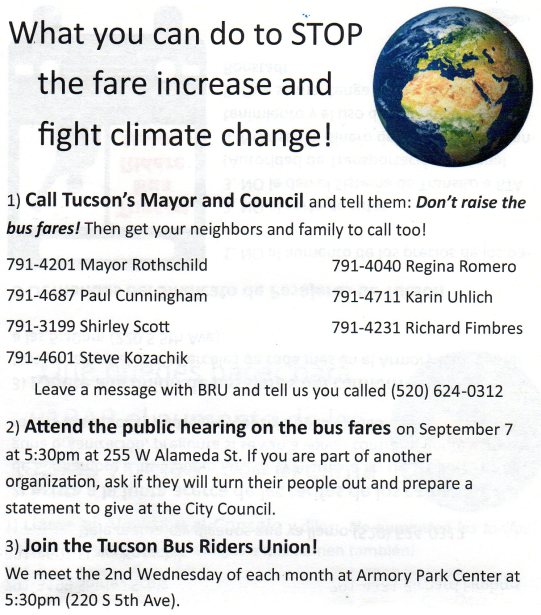
This is only the beginning, we must act now to stop fare increases and fight climate change!

img014


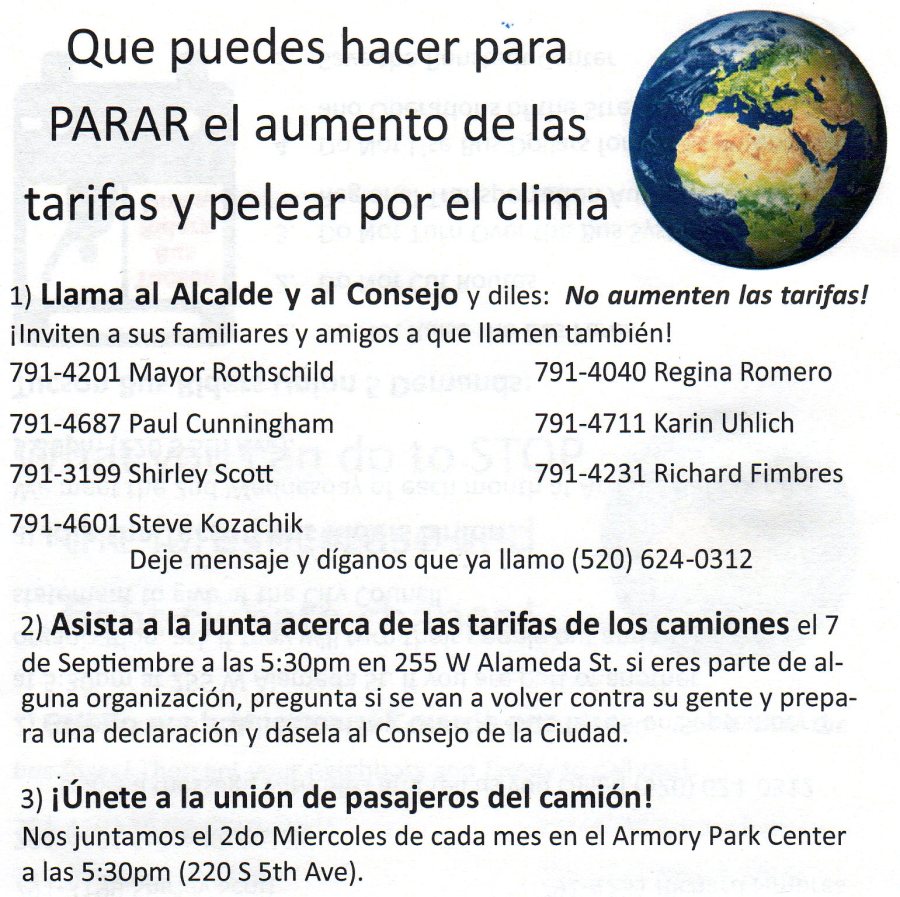
GRACIAS A TODOS LOS QUE ASISTIERON A LA JUNTA DE CAMBIO DE CLIMA PATROCINADO POR LA UNION DE LOS PASAJEROS DEL CAMIÓN (¡y Los Miembros del Consejo de la Ciudad tomen nota!). ¡ASISTIERON 240 PERSONAS!
Los Oradores Principales State Sen. Steve Farley y scientist Gregg Garfin, así como el distinguido panel, se llevaron a casa el sentimiento de que aumentar los precios de los camiones en este tiempo del cambio de clima no es con el propósito de aumentar los pasajeros en los camiones.
Anoche fue claro que para el Consejo votar en Septiembre no es muy sabio o en el interés de la gente de bajos recursos y el planeta.

Esto es lo que podemos hacer.

img015

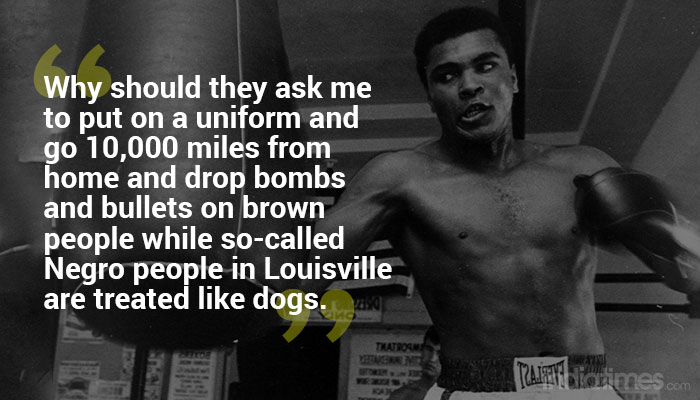
MUHAMMAD ALI…the warrior saint, the most important athlete to ever live // MUHAMMAD ALI…el santo guerrero, el atleta mas importante que jamas haya existido

Looking for inspiration in the struggle against oppressors of poor people and the planet on the eve of the Bus Rider Union sponsored CliMAmate Change Summit…

This article was
sent to us by long time Casa Maria
supporter Paul Crowley, with a note
saying, “this was the
muhammad-ali-684127best article on Ali that I have ever read.”


Click here to check it out “‘I Just Wanted to Be Free’: The Radical Reverberations of Muhammad Ali”-by Dave Zirin


M A 1


MUHAMMAD ALI…el santo guerrero, el atleta mas importante que jamas haya existido

En busca de inspiración en la lucha contra los opresores de los pobres y de la tierra el día antes de Una Platica del Cambio de Clima patrocinado por el Bus Riders Union…

Este artíclo fue enviado a nosotros por Paul Crowley, quien ha apoyado Casa Maria por mucho tiempo con una nota diciendo: “este fue el mejor artículo sobre Mohammad Ali que he leído en mi vida.”

Click aqui para leerlo “‘I Just Wanted to Be Free’: The Radical Reverberations of Muhammad Ali”-by Dave Zirin

What’s at stake in the transit debate? / ¿Qué es lo que está pasando con el debate del Transito?

TransitRidersUnionPhoto1-insert

By Sarah Launius, PhD Candidate in the School of Geography and Development at the UA

No doubt you know already that the Mayor and Council are looking to raise fares for bus and streetcar riders. The different proposals put forward each place a heavy burden on different types of riders. Although the city claims they do not want to have to reduce service, make transit less accessible to current and potential riders, or increase fares (all of which are debatable) the message is clear: The City Council does not want to pay for transit out of the city’s general fund. Or another way to think of it is they want more of the cost to be covered by riders as opposed to the general fund.

There’s a few ideas implied in this thinking that we should parse out. The first is whether transit is a necessary public service akin to parks, roads, schools and first responders. Arguably, it should be. Further, transit in the U.S. is overwhelmingly supported by local, state and the federal government. Second, while we can wish that transit costs were covered more by riders, most riders have not seen an increase in wages, so is it really fair to expect these same riders to bear more of the costs? Third, just as the city has taken steps to encourage rain harvesting we must understand that incentivizing transit is an important quality-of-life and climate justice issue in our desert town. As Councilor Cunningham recently shared in his newsletter:

Our climate is changing, and it is caused by human activity. Six billion people on the planet is going to have an impact. In fact, our region is experiencing some of the most pronounced changes in the lower 48 states. Between 1976 and 2005 we had an increase of average annual temperature of 2.5 degrees. This is more than twice the global average for the same period of time. The desert southwest is expected to experience a further increase in temperature of 5 to 8 degrees by the end of the century given no reductions in greenhouse gas emissions. These shifts are expected to be greater in the summer than the winter… To accommodate our cars with wider roads or parking lots we lay down miles of asphalt. An estimate I’ve seen is that a quarter of our city’s land area is covered by asphalt.

Councilor Cunningham draws connections to the role of asphalt in heating our desert town and goes on to discuss how asphalt is contributing to the wild flooding we’ve been seeing. Of course, he’s right and what are we going to do about it?

The first thing we, as residents, must get clear on is that our Mayor and Council make priorities all the time. This is particularly true in a moment of tighter budgets. So the question is how do we, as a city, incorporate creative solutions that reflect who we are and what we value as Tucsonans? Members of the Bus Riders Union have been quite clear that we must look to grow our transit system not shrink it through budget cuts or diminish it by reducing riders who can’t pay higher fares. It’s important to note that transit, like education or rainwater harvesting rebates, operates in a “you get what you pay for” rationale. It does take investment to improve service frequency, extend service hours and market the bus so that new riders see it as a viable alternative. Likewise, these additional riders bring in more fare revenue. But, I want to be crystal clear about this: ALL RIDERS, whether they are eligible for the economy fares or, if they’re like me and earn just too much to qualify – they ALL deserve excellent service. For too long Sun Tran has operated with a belief that they serve folks who can’t get it together to own their own car—this belief ultimately feeds into an anti-poor, anti-working class position where you provide the bare minimum because you think that’s all the riders deserve and all the electorate requires of you. Many of our neighbors and our Mayor and Council feed this position when they assume they are too good to use our transit system and when they assume that the only reason not to explicitly dismantle the transit system is so they don’t look like enemies to our overwhelmingly working-class city.

Here’s an idea that the Bus Riders Union has been floating – create a designated funding source for transit overseen by the City of Tucson rather than PAG. And – for heaven’s sake – don’t jeopardize the transit system by increasing fares as it is still recovering from the strike. Need some cash to get you through the next year? Why not ask our downtown redevelopment boosters who continue to want to attract the more anti-car millenials to invest in Sun Tran, the system that supports countless workers in reaching those jobs downtown and would actually help the rest of the city too.


¿Qué es lo que está pasando con el debate del Transito?

Por Sarah Launius, PhD Candidate in the School of Geoography and Development at the UA

No hay duda que ya saben que el Alcalde y el Consejo quieren aumentar las tarifas del camión y del streetcar. Diferentes propuestas han puesto un peso muy grande en los usuarios del camión. La Ciudad dice que no quieren reducir los servicios o aumentar las tarifas (todo esto está en debate) el mensaje es claro: el Consejo de la Ciudad no quiere pagar por la transportación con los fondos de la ciudad. Otra manera de decirlo es que quieren que los pasajeros cubran el pago.

Hay un par de ideas que debemos analizar. La primera es si el transito es un servicio necesario como los parques, calles, escuelas y primeros auxilios. Podría decirse, que debería de ser. Además, el tránsito en los Estados Unidos es apoyado por el gobierno, local, federal y del estado. Segundo, mientras deseaban que los costos del tránsito fueran cubiertos por los pasajeros, la mayoría de los pasajeros no han visto ningún incremento en sus salarios, entonces ¿es justo que estos mismos pasajeros cubran esos costos? Tercero, así como la ciudad a sugerido que se guarde el agua de las lluvias para el riego deberíamos entender que dando gratificaciones para usar el transito es una calidad de vida importante y justicia al clima en nuestro desértico pueblo. Así como el Concejal Cunningham compartió en la carta:

Nuestro clima está cambiando, y es causado por la actividad humana. Seis millones de personas en el planeta van a sufrir las consecuencias. De hecho, nuestra región está experimentando el cambio más notorio de los 48 estados. Entre 1976 y 2005 tenemos un aumento anual de 2.5 grados en la temperatura. Esto es más del doble del promedio global en el mismo espacio de tiempo. Se espera que el desierto del suroeste tenga un aumento de temperatura de 5 u 8 grados al final del siglo si no se reduce el dióxido de carbono que despiden los carros. Este cambio se espera que va a ser más grande en el verano que el invierno… para acomodar los carros en calles más amplias o más parqueaderos debemos de usar mucho pavimento.

El Concejal Cunningham relaciono el calentamiento de nuestro pueblo con el pavimento y como esto esta contribuyendo con las inundaciones. Por supuesto, él está en lo correcto ¿y que estamos haciendo al respecto?

La primera cosa, como resientes, necesitamos estar claros en que nuestro Alcalde y el Consejo tienen decisiones importantes que tomar todo el tiempo y tienen que priorizar. Esto es verdad en un presupuesto muy apretado. Así que la pregunta es, ¿cómo nosotros como ciudad podemos aportar soluciones creativas que refleje quienes somos y lo que valemos como Tucsonenses? Los Miembro de la Unión de los Pasajeros del Camión han sido muy claros cuando dicen que debemos buscar la manera de hacer crecer el sistema de transito no de reducirlo por el recorte de presupuesto o disminuirlo reduciendo los pasajeros que no pueden pagar precios altos.

Es importante resaltar que el transporte, al igual que la educación o recolectar el agua, operan en un “obtienes por lo que pagaste” racionalmente. Hay que invertir para mejorar el servicio, extender las horas de servicio y promocionar el camión, así los pasajeros nuevos lo van a ver como una alternativa. De la misma manera, esos pasajeros adicionales traerán más ingresos. Pero, quiero ser muy clara con esto, TODOS LOS PASAJEROS, si califican o no para las tarifas económicas o, si son como yo y, gana lo suficiente para no calificar – TODOS ellos merecen un servicio excelente. Por mucho tiempo el Sun Tran ha trabajado con la creencia que da su servicio a personas que no pueden comprar un carro – esta creencia alimenta la posición de los no pobres, los que no son de la clase trabajadora donde se provee lo mínimo porque se piensa que es todo lo que los pasajeros se merecen. Muchos de nuestros vecinos, el Alcalde y el Consejo alimentan esta posición cuando asumen que son muy buenos como para usar el servicio de tránsito y cuando ellos asumen que la única función de no desmantelar explícitamente el sistema de transito es para que ellos no se miren como enemigos para nuestra clase trabajadora.

Esta es una idea que tiene la Unión de los Pasajeros del Camión – crear un fondo para el sistema de transito supervisado por la Ciudad d Tucson en lugar del PAG. Y – por el amor de Dios – no pongan en peligro el sistema de transito que apenas se están recuperando de la huelga de aumentar las tarifas. ¿Necesitas dinero para hacerla para el próximo año? ¿Porque no le preguntas a los desarrolladores del downtown que todavía quieren atacar al anti-carro de nuevo milenio para invertir en el Sun Tran? el sistema que apoya a innumerables trabajadores a llegar a sus trabajos y también al resto de la ciudad.
 

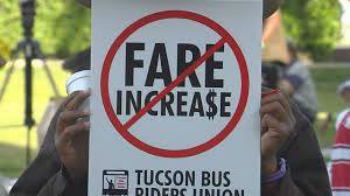
SIX ENVIRONMENTAL GROUPS SIGN A LETTER ASKING THE MAYOR AND COUNCIL TO NOT RAISE FARES AND INSTEAD, INVEST IN TRANSIT

August 9, 2016

Mayor Jonathan Rothschild
255 West Alameda
PO Box 27210
Tucson, Arizona 85726

Cc: Members of the City Council

Dear Mayor Rothschild,

As organizations with long-standing commitment to the many species and ecosystems that comprise the Sonoran Desert, we urge you to increase public transit services in the City of Tucson. Our climate is changing at an unprecedented pace due to greenhouse gas emissions, most of which are the result of burning fossil fuels. This is a critical moment for Tucson to reduce carbon dioxide from personal vehicles by improving public transit service and providing residents with incentives to use it.

Transportation accounts for 26% of U.S. greenhouse gas emissions, the second-largest category of contributors behind fossil-fuel power plants. The great majority of transportation-produced carbon dioxide is from personal vehicles. The average passenger car produces one pound of carbon dioxide for each mile traveled. A majority of the earth’s human population lives in urban areas, so cities have an important role to play in reducing carbon emissions and mitigating climate change. In Tucson, with transportation emissions at 28%, public transit must play a critical role in reducing the city’s emissions. Public transit also is a vital tool in our effort to improve air quality and stay under the federally mandated limits on ozone pollution to protect public health.

On August 9 you are to decide if you will reduce transit service, followed with a decision on September 21 if you will raise bus fares and by so doing reduce overall ridership and send more personal vehicles onto our roads. Raising fares and reducing service undermines the goals of Action Climate Tucson plan to increase the transit mode split for the region. This would be a dangerous path for our city and we urge the Mayor and Council instead to invest more in public transit to increase ridership and reduce the use of personal vehicles. Now is the time to emphasize transit, not to create barriers to it.
Sincerely,

Rincon Group of the Sierra Club                                                

Center for Biological Diversity

Coalition for Sonoran Desert Protection

Sky Island Alliance

Southwestern Biological Institute

Safford Peak Watershed Education Team

___________________________

6 Grupos Ambientales Firmaron una Carta pidiendo al Alcalde y al Consejo que No Aumenten las Tarifas, que inviertan en el Transito.

9 de Agosto, 2016

Alcalde Jonathan Rothschild

255 West Alameda

PO Box 27210

Tucson, Arizona 85726

Cc: Miembros del Consejo de la Ciudad

Querido Alcalde Rothschild,

Como organizaciones de un largo compromiso a muchas especies y ecosistema que abarca el Desierto de Sonora, nos urge que usted aumente los servicios del transporte público en la Ciudad de Tucson. Nuestro clima está cambiando a un ritmo sin precedentes por las emisiones de los gases. Este es un momento crítico para Tucson de reducir el dióxido de carbono de los carros usando el transporte público y proveyendo incentivos a los residentes para que los usen.

La emisión de gas por los carros es un 26% en los Estados Unidos, el segundo lugar en la categoría de contribuir combustible en las plantas eléctricas. La gran mayoría de producir dióxido de carbono es los vehículos personales. Un carro produce 1 libra de dióxido de carbono por cada milla que recorre. La mayoría de las personas viven en áreas urbanas, así que las ciudades tienen un rol muy importante en reducir la emisión de carbono y mitigar el cambio de clima. En Tucson, con la emisión de transportación es de 28%, el transito público tiene un rol muy crítico en reducir la emisión de gases en la ciudad. El transito público es una herramienta vital para mejorar la calidad del aire y estar bajo el reglamento federal de los límites de la contaminación para proteger la salud pública.

El 9 de Agosto usted va a decidir si reduce el servicio de tránsito, siguiendo con la decisión el 21 de Septiembre de aumentar las tarifas y por reducir los pasajeros van a aumentar los carros en las calles. Aumentar las tarifas y reducir el servicio de transito perjudica las metas del plan del Clima de Tucson de aumentar el tránsito por toda la región. Esto va a ser peligroso para Tucson nos urge que el Alcalde y el Consejo inviertan en el transito público para aumentar los pasajeros y reducir el uso personal de vehículos. Ahora es el tiempo de enfocarnos en el tránsito, no en crear barreras.

Sinceramente,

Rincon Group of the Sierra Club

Center for Biological Diversity

Coalition for Sonoran Desert Protection

Sky Island Alliance

Southwestern Biological Institute

Safford Peak Watershed Education Team

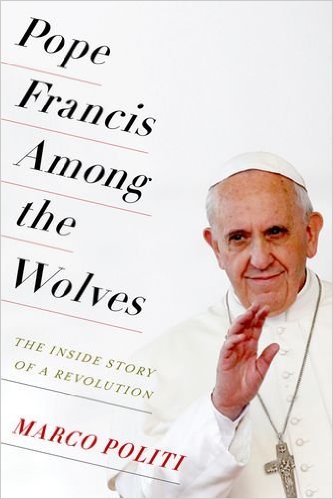
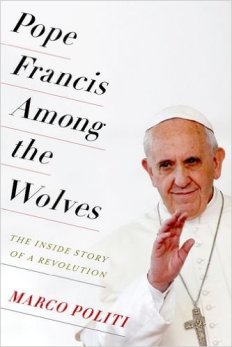
POPE FRANCIS AMONG THE WOLVES

Pope Francis Among the Wolves

The Inside Story of a Revolution 

By Marco Politi 

Columbia University Press. $27.95

Reviewed by Elizabeth Webb in America Magazine, June 20-27, 2016. Check it out here.

I’m going to find this book and read it!41KBKCGWdpL._SX331_BO1,204,203,200_.jpg

If you cant read this book, check out this book review!

Apparently this book reiterates what a righteous guy the Pope is in public but it also “sheds light on the Pope’s revolution within church institutions.”

The book tells how Francis shakes up the Vatican by cracking down on money laundering, misuse of funds, and abuse of power.

It talks about how these actions contrast with his simplicity and are DELIBERATE and COMPLEX, just like those of an authentic revolutionary!

Also, there are stories of what its like to ride the city bus with Francis and his love and respect for Dorothy Day and the Catholic Worker.

_________________________

El PAPA FRANCISCO EN MEDIO DE LOS LOBOS

La Historia dentro de la Revolución

Por Marco Politi

Prensa de la Universidad de Colombia

Revisado por Elizabeth Webb en la Revista América, 20-27 de Junio, 2016.

Voy a encontrar el libro y leerlo; ¡si puedes leer este libro, mira este repaso de la historia!

Aparentemente este libro reitera lo justo que es el Papa en público, pero también “aclara la revolución del Papa dentro de las Iglesias.”

El libro habla de cómo el Papa sacude al vaticano condenando el lavado de dinero, el mal uso de fondos y el abuso del poder.

¡También habla acerca del contraste de estas acciones con su simplicidad y son premeditados y confusos, así como como los de un auténtico revolucionario!


WE NEED TO REDIRECT THIS CONVERSATION

IMG_2237.JPG
Sarah Launius (center)

by Sarah Launius for the Bus Rider Union
* Since this blog was posted Sun Tran staff presented a revised projection of Councilor Cunningham’s proposal. A revised table showing these adjustments are at the bottom of the blog. The question persists as to why staff presented an inaccurate Cunningham proposal to begin with.

Why are we choosing from equally BAD plans? Why should riders agree to higher fares when there are NO plans to improve bus service? How do we improve bus service if we drive ridership down because of increased fares? These are just some of the questions Bus Riders Union members have been asking. Please take a look at the fare proposals below and tell us and City Council what it will mean for you.

We are getting close to August 9 when the City Council will decide whether to approve service reductions to transit and September 7 when the City Council will decide whether and how to raise the bus fares. Currently there are three different proposals that have been suggested – all of which raise fares considerably. Here’s a really basic view of the three fare proposals under consideration and the additional proposal prepared by staff at the request of the Transit Taskforce (not currently under consideration):

Beginning Fare Final Increased Fare in 2021 Percent of Increase
Economy Fare
City Manager’s $0.50 $0.75 50%
Councilor Cunningham’s $0.50 $0.80 60%
Mayor Rothschild’s $0.50 $0.50 0%
Transit Taskforce Proposal $0.50 $0.60 20%
Base Fare
City Manager’s $1.50 $1.75 17%
Councilor Cunningham’s $1.50 $1.60 7%
Mayor Rothschild’s $1.50 $2.00 33%
Transit Taskforce Proposal $1.50 $1.75 17%
Day Pass
City Manager’s $3.50 $4.10 17%
Councilor Cunningham’s $3.50 $4.00 14%
Mayor Rothschild’s $3.50 $4.10 17%
Transit Taskforce Proposal $3.50 $4.00 14%
30 Day Economy Pass
City Manager’s $15.00 $22.00 47%
Councilor Cunningham’s $15.00 $24.00 60%
Mayor Rothschild’s $15.00 $22.50 50%
Transit Taskforce Proposal $15.00 $17.00 13%
30 Day Pass
City Manager’s $42.00 $49.00 17%
Councilor Cunningham’s $42.00 $48.00 14%
Mayor Rothschild’s $42.00 $49.00 17%
Transit Taskforce Proposal $42.00 $44.00 5%


No public transit system runs on fares alone. Bus Riders Union members have been very clear that it is unfair and unwise to assume that increasing fares is an appropriate way to address the budget shortfall.

As a city if we are talking about fares without addressing the need for a dedicated funding source for transit and the need to focus on increasing ridership – then we are accepting the easy and lazy solution at the cost of growing a great transit system for all. Leave a comment and tell us how each of these proposals will or will not affect you. Better yet, call our Council members and let them know too.

791-4201 Mayor Rothschild

791-4040 Regina Romero

791-4687 Paul Cunningham

791-4711 Karin Uhlich

791-3199 Shirley Scott

791-4231 Richard Fimbres

791-4601 Steve Kozachik

* Revised table reflecting changes to Councilor Cunningham’s proposal

Beginning Fare Final Increased Fare in 2021 Percent of Increase
Economy Fare
City Manager’s $0.50 $0.75 50%
Councilor Cunningham’s $0.50 $0.75 50%
Mayor Rothschild’s $0.50 $0.50 0%
Base Fare
City Manager’s $1.50 $1.75 17%
Councilor Cunningham’s $1.50 $1.50 0%
Mayor Rothschild’s $1.50 $2.00 33%
Day Pass
City Manager’s $3.50 $4.10 17%
Councilor Cunningham’s $3.50 $3.75 7%
Mayor Rothschild’s $3.50 $4.10 17%
30 Day Economy Pass
City Manager’s $15.00 $22.00 47%
Councilor Cunningham’s $15.00 $22.50 50%
Mayor Rothschild’s $15.00 $22.00 47%
30 DayPass
City Manager’s $42.00 $49.00 17%
Councilor Cunningham’s $42.00 $45.00 7%
Mayor Rothschild’s $42.00 $49.00 17%


__________________

Para La Unión de los Pasajeros del Camión por Sarah Launius

¿Por qué estamos eligiendo planes MALOS? ¿Por qué los pasajeros del camión tienen que estar de acuerdo en el aumento de las tarifas cuando NO hay un plan para mejorar el servicio del transporte? ¿Cómo vamos a mejorar el servicio si estamos ignorando las necesidades de los pasajeros aumentando las tarifas? Solo hay una petición que los miembros de la Unión tienen. Por favor miren la propuesta de abajo y díganos y también dígale al Consejo de la Ciudad que significa para usted.

Se está acercando el 9 de Agosto cuando el Consejo de la Ciudad va a decidir si aprueban la reducción del servicio de tránsito y el 7 de Septiembre cuando el Consejo decidirá cuándo y cómo aumentaran las tarifas. Hay tres propuestas diferentes y en las tres está el aumento de las tarifas considerablemente. Aquí están las tres propuestas y una adicional preparada por el personal de tránsito (que no se está considerando):

Porcentaje del Comienzo del Aumento de la Tarifa Final en el 2001

Tarifa

Manejador de la Ciudad $0.50 $0.75 50%

Concejal Cunningham   $0.50 $0.80 60%

Alcalde Rothschild      $0.50 $0.50  0%

Propuesta de Transito    $0.50 $0.60 20%

Tarifa de Base

Manejador de la Ciudad $1.50 $1.75 17%

Concejal Cunningham   $1.50 $1.60  7%

Alcalde Rothschild       $1.50 $2.00 33%

Propuesta de Transito     $1.50 $1.75 17%

Pase Diario

Manejador de la Ciudad $3.50 $4.10 17%

Concejal Cunningham   $3.50 $4.00 14%

Alcalde Rothschild       $3.50 $4.10 17%

Propuesta de Transito     $3.50 $4.00 14%

Pase Económico de 30 Días

Manejador de la Ciudad $15.00 $22.00 47%

Concejal Cunningham   $15.00 $24.00 60%

Alcalde Rothschild        $15.00 $22.50 50%

Propuesta de Transito     $15.00 $17.00 13%

Pase de 30 Días

Manejador de la Ciudad $42.00 $49.00 17%

Concejal Cunningham   $42.00 $48.00 14%

Alcalde Rothschild’      $42.00 $49.00 17%

Propuesta de Transito    $42.00 $44.00  5%

El Sistema de Transito Publico se mantiene de trifas. Los miembros de La Unión de los Pasajeros del Camión han dejado muy claro que es injusto e imprudente que aumentes las tarifas usando como pretexto el déficit del presupuesto.

Como Ciudad estamos hablando de las tarifas sin mencionar la necesidad de crear un recurso para el fondo del tránsito y la necesidad de enfocarse en el aumento de los pasajeros – es entonces cuando estamos aceptando la solución fácil de crear un buen sistema de tránsito para todos. Deja u comentario y déjanos saber cómo estas propuestas te afectaran. O mejor aún llama a los Miembros del Consejo y déjales saber.

(520) 791-4201 Mayor Rothschild

(520) 791-4040 Regina Romero

(520) 791-4687 Paul Cunningham

(520) 791-4711 Karin Uhlich

(520) 791-3199 Shirley Scott

(520) 791-4231 Richard Fimbres

(520) 791-4601 Steve Kozachik