RAPPIN CASA MARIA STYLE!

Come hear Cesar Aguirre Rap at the Benefit Concert for Casa Maria!

Tuesday Nov. 25th, at 7p.m. at Club Congress, 311 E. Congress Street. $7 donation or free if you don’t have it.

Cesar A1

by Cesar Aguirre,

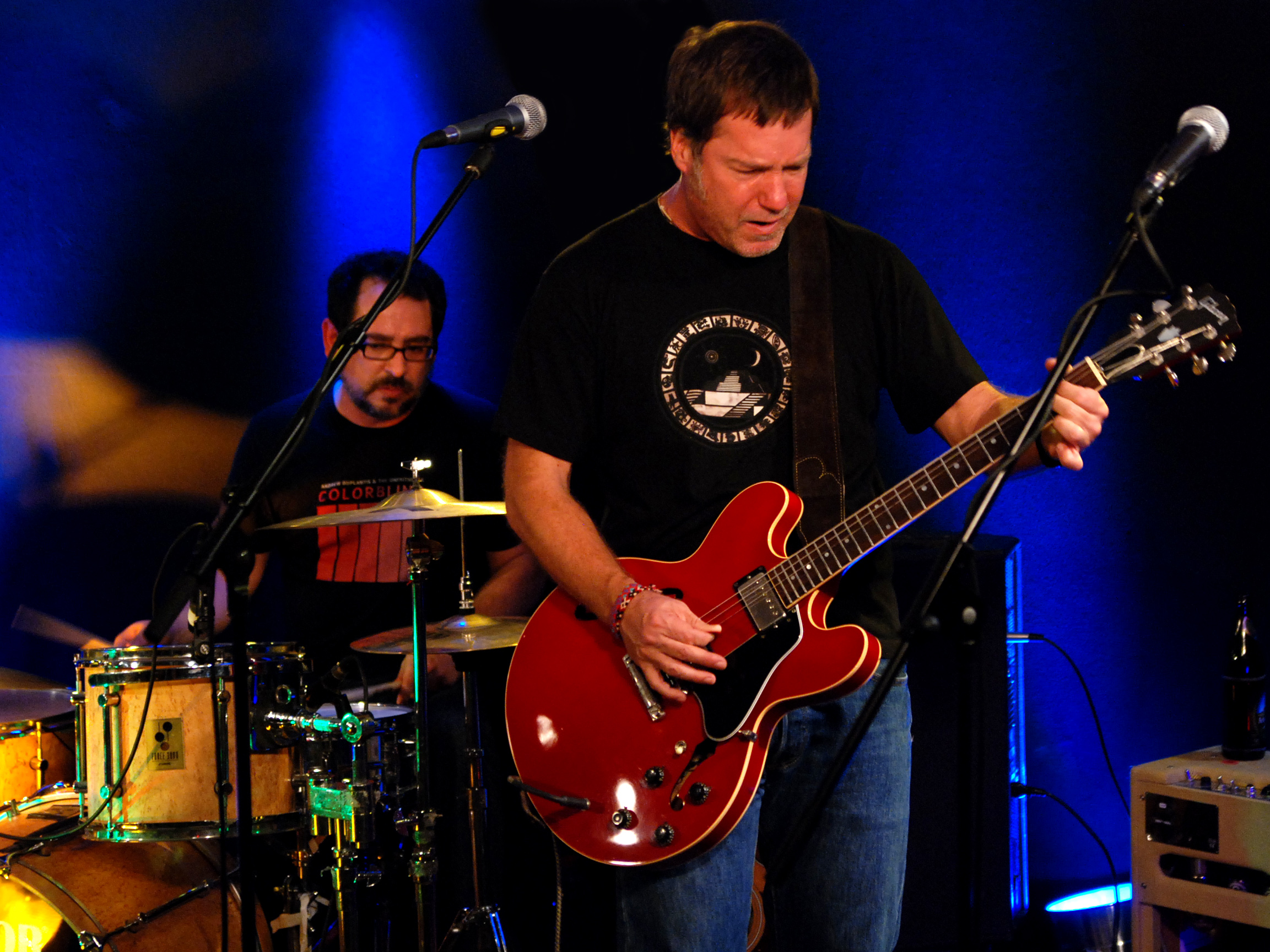
I have always been a very passionate person. One of my greatest passions is music. I was raised around musicians. Both sides of my family are very talented. I can still remember listening to my Tata strumming his guitar in the living room or pulling out his amp and microphone so I could MC while he played Tiger Rag on his accordion. I had many family members that were musicians and I always wanted to be a part of it but I lacked the hand coordination needed to play instruments. Then I fell in love with Hip-Hop.

I can still remember feeling the music, the sound of the DJ scratching and mixing records as the MC grabs the mic and busts a rhyme. I still remember my first mixing board and recording system. Me and my little brother, sitting in our tiny room, speakers and equipment on our dresser, notebooks in hand, writing rhyme after rhyme. Even though most of the music I listened to and wrote back then was of the gangster or thug mentality, it was all heart and spoke to the reality of the of being born into poverty. The struggles of coming up in the Barrio. That same struggle is what tore me away from my passion.

Most kids are told, finish school, go to college, and pursue a career that is successful and makes you money. That was no longer an option for me. I worked and I hustled, doing anything to get ahead and make money. I lost all passion for life. All that filled my head was making money, which led to a very destructive lifestyle. I gave up on rap and put down my pen and pad for over 12 years.

Only by God’s grace did I stumble upon the love of Hip-Hop again. A few years ago I ran into my cousin who was still rapping and he encouraged me to try it again. We wrote a song about the relationships we’ve had with the mothers of our children. The verse I wrote came out really good and even though we never finished or recorded the song it inspired me to pursue my passion again.

At first it was really hard for me. I couldn’t finish a verse, much less an entire song. I was still trying to write about the things I used to write about when I was young; chasing women, doing and selling drugs and of course, making money. I wasn’t living that lifestyle anymore so how could I rap about it. God gives all of us talent to be used for good. This was one of my talents and I needed to seek God in order to figure out what to do with it.

One day, as I’m struggling to write something, my daughter walks in the room singing a Hip-Hop song from the radio. I asked her if she knew what that song was talking about. She said no, but seemed to know most of the words. We went over the lyrics together and her eyes widened as she figured out the meaning. Now that the art of rap has been gentrified by pop culture, there is no longer heart in Hip-hop. It’s all about who has the biggest house, the nicest cars. All about making money and getting wasted.

That’s when it hit me. I needed to put the love back in Hip-Hop. I began to put my heart in it and write about what matters. The first song I completed in over 12 years was “Hear no evil, See no evil” which features my daughters on the chorus of the song and speaks to the current state of Hip-Hop and our society as a whole. Today my lyrics reflect my struggle, and that of many others, from many perspectives. I am revolutionary and honest in my music, with the hope of provoking others to question the world and the powers that control it.

CASA MARIA THANKSGIVING BENEFIT 2014

rich_hopkins

Thanks to local guitar hero Richard Hopkins for organizing the XII annual Rock and Roll Show to benefit Casa Maria next Tuesday night at Club Congress! This one promises to be one of the best!

See leaflet:

casa maria 2014_website size

On Saturday, November 22, Rich will play a CD release party at Club Congress. Here are some glowing words about him from today’s Arizona Daily Star:

For nearly 30 years, Rich Hopkins has been a staple of Tucson’s music scene, an example of the type of quality musician the city can produce.

Hopkins is a consummate songwriter and will prove it at a release party for his latest album “Tombstone” at Hotel Congress on Saturday night.

Hopkins will play a free show starting at 7 p.m. on the Hotel plaza with Carlos Arzate and the Kind Souls opening.

You can also catch Hopkins when he performs at the annual Casa Maria Thanksgiving benefit show, which raises money for the Casa Maria Catholic Worker Community, next Tuesday.

That show begins at 7:30 p.m. at Club Congress. There is a $7 suggested donation, or bring nonperishable  foods.

Why is Mayor Rothschild so intent on persecuting BUS RIDERS?

JRothschildSuzzane

by Brian Flagg,

At yesterday’s Council meeting Mayor Rothschild could have realized that, once again, he had only one other vote for raising fares.

He could have accepted the recommendation of Councilwoman Karin Uhlich and his own Transit Task Force to not raise fares, but instead embark on an aggressive marketing campaign to increase ridership, which would raise more revenues for the bus system.

But he just could not do it. So, we all have to go back to the next Council meeting on December 9th to fight this battle one more time.

The Mayor never misses a chance to talk in behalf of entities and issues that have to do with poverty. He is for more affordable housing, for increased literacy, for ex-prisoners having their rights restored, etc.

But that is all just talk!

The poverty issue he is able to truly affect in his role as Mayor of Tucson is to protect bus riders living in poverty from having to suffer from a fare increase.

Why is he so fixated on extracting disposable income from individuals living in poverty, who depend on the bus to go to the grocery store, medical appointments, school and lousy paying jobs that make it almost impossible to break the chains of poverty?

This Thanksgiving season I give thanks for the 5 members of the City Council (Uhlich, Romero, Fimbres, Cunningham and Scott) who have steadfastly, for many years, demonstrated compassion for their bus riding constituents in this, the 8th poorest city in the United States.

___________________

por Brian Flagg,

Ayer en la reunión del Concilio el alcalde Rothschild, una vez más, no pudo dares cuenta de que solo contaba con un voto en favor de subir las tarifas.

El pudo haber aceptado las recomendaciones del al Concejal Karin Uhlich y de su propio Equipo de Trabajo sobre el Transporte, de no incrementar las tarifas, pero si iniciar una campaña agresiva de marketing para incrementar el número de pasajeros, lo cual significaría un aumento de ingresos para el sistema de camiones.

Pero el simplemente no lo podía aceptar. Por eso, todos tenemos que regresar a luchar esta batalla una vez más en la próxima reunión del Concilio el 9 de diciembre.

El Alcalde nunca pierde la oportunidad de hablar en favor de entidades o temas que tienen que ver con la pobreza. El dice estar a favor de más viviendas asequibles, a favor de incrementar la alfabetización, y a favor de restaurar los derechos de los ex convictos, etc.

¡Pero estas son puras conversaciones!

El problema de la pobreza en el cual él es capaz de tener un verdadero impacto como Alcalde de Tucson es protegiendo a los pasajeros del camión, que viven en la pobreza, a que no sufran de un incremento en las tarifas.

¿Por qué esta tan obsesionado en extraer los ingresos disponibles de las personas que están viviendo en la pobreza, los que dependen del camión para ir a la tienda, a las citas medicas, a la escuela y a sus trabajos, lo que hace casi imposible de romper las cadenas de la pobreza?

En esta temporada de acción de Gracias, yo agradezco por los 5 miembros del Concilio de la Ciudad (Uhlich, Romero, Fimbres, Cunningham and Scott) los cuales continuamente han demostrado compasión por sus constituyentes, los pasajeros del camión, en esta la 8 ciudad más pobre en los Estados Unidos.


Mayor and Council Mtg Tuesday Nov. 18th 2pm on Fare Increases and Route Cuts

Please join us today, Tuesday Nov. 18th at City Hall for the Mayor and Council Study Session on bus fare increases and route cuts.

Links to important documents for today can be found here:

Agenda

To: The Plantation Owners (UA President Ann Weaver Hart, Athletic Director Greg Byrne, Coach Rich Rodriguez and Coach Sean Miller)

Check this out!

College Athletes of the World, Unite

By Kareem Abdul Jabbar, the greatest and most conscious Brother to ever play basketball.


College Athletes of the World, Unite

By Kareem Abdul-Jabbar

November 12, 2014

Jacobin

Life for student-athletes is no longer the quaint Americana fantasy of the homecoming bonfire and a celebration at the malt shop. It’s big business in which everyone is making money — everyone except the eighteen to twenty-one-year-old kids who every game risk permanent career-ending injuries.

K

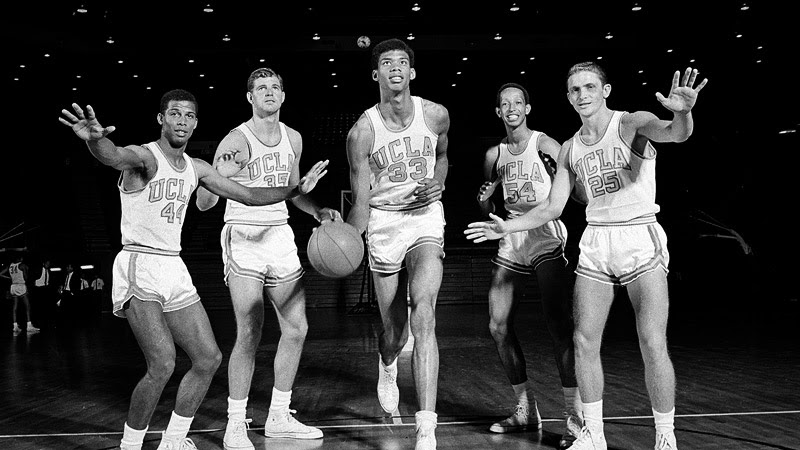
Kareem Abdul-Jabbar at UCLA, AP Photo,

When I played basketball for UCLA, I learned the hard way how the NCAA’s refusal to pay college athletes impacted our daily lives. Despite the hours I put in every day, practicing, learning plays, and traveling around the country to play games, and despite the millions of dollars our team generated for UCLA — both in cash and in recruiting students to attend the university — I was always too broke to do much but study, practice, and play.

What little money I did have came from spring break and summer jobs. For a couple summers, Mike Frankovich, president of Columbia Pictures and a former UCLA quarterback, hired me to do publicity for his movies, most memorably Cat Ballou (which was nominated for five Academy Awards).

In 1968, I needed to earn enough summer money to get through my senior year. So, instead of playing in the Summer Olympics, I took a job in New York City with Operation Sports Rescue, in which I traveled around the city encouraging kids to go to college. Spring breaks I worked as a groundskeeper on the UCLA campus or in their steam plant repairing plumbing and electrical problems. No partying in Cabo San Lucas for me. Pulling weeds and swapping fuses was my glamorous life.

Despite my jobs, every semester was a financial struggle. So in order to raise enough money to get through my junior and senior years, I let Sam Gilbert, the wealthy godfather of a friend of mine, scalp my season tickets to his rich friends. This brought me a couple thousand dollars. Spread out over a year, it was still barely enough to survive. I was walking out on the court a hero, but into my bedroom a pauper.

Naturally, I felt exploited and dissatisfied. In my first year, our freshman team beat the varsity team, who had just won the NCAA championship. We were the best team in the country, yet I was too broke to go out and celebrate. The more privileged students on academic scholarships were allowed to make money on the side, just not the athletes.

And unlike those with academic scholarships, if we were injured and couldn’t play anymore, we lost our scholarships but still had medical bills to worry about. We were only as valuable as our ability to tote that ball and lift that score.

Coach Wooden told us that there was no changing the NCAA’s minds that they were “immovable, like the sun rising in the east.” I never personally encountered any players who cheated or shaved points, but I could see why some resorted to illegally working an extra job or accepting monetary gifts in order to get by.

The worst part is that nothing much has changed since my experience as a college athlete almost forty years ago. Well, one thing has changed: the NCAA, television broadcasters, and the colleges and universities are making a lot more money.

The NCAA rakes in nearly $1 billion annually from its March Madness contract with CBS and Turner Broadcasting.

The NCAA president made $1.7 million in 2012.

The ten highest paid coaches in this year’s March Madness earn between $2,627,806 and $9,682,032.

Management argues that student-athletes receive academic scholarships and special training worth about $125,000. While that seems like generous compensation, it comes with some serious restrictions:

College athletes on scholarship are not allowed to earn money beyond the scholarship. Yet students on academic scholarships are allowed to earn extra money.

The NCAA allows the scholarship money to be applied only toward tuition, room and board, and required books. On average, this is about $3,200 short of what the student need.

Academic scholarships provide for school supplies, transportation, and entertainment. Athletic scholarships do not.

Athletic scholarships can be taken away if the player is injured and can’t contribute to the team anymore. He or she risks this possibility every game.

The injustice worsens when we realize that the millionaire coaches are allowed to go out and earn extra money outside their contracts. Many do, acquiring hundreds of thousands of dollars a year beyond their already enormous salaries.

In this light, not only is the compensation inadequate to the effort and risk compared to academic scholarships, but there is a real chance that players may end up without an education, yet deeply in debt. Players who are seriously injured could technically make use of the NCAA’s catastrophic injury relief. This sounds fair and compassionate, except the policy doesn’t apply unless the medical expenses exceed $90,000 — which most claims don’t. If the student’s medical bills are $80,000, they’re on the hook for it themselves.

To protect against career-ending injuries, the NCAA also offers Student-Athlete Disability Insurance. Unfortunately, this only pays if the athlete can’t return to the sport at all. But most injuries can be repaired to some extent, even if the athlete is no longer as good and gets cut from the team. Only a dozen such claims have been successful over the past twenty years.

Life for student-athletes is no longer the quaint Americana fantasy of the homecoming bonfire and a celebration at the malt shop. It’s big business in which everyone is making money — everyone except the eighteen to twenty-one-year-old kids who every game risk permanent career-ending injuries.

It’s the kind of injustice that just shouldn’t sit right with American workers who face similar uncertainty every day.

Unfortunately, those with a stranglehold on the profits aren’t likely to give up their money just because it’s the right thing to do. Instead, they will trickle some out in a show of fairness and hope that it’s enough to keep the peasants from storming the castle. That’s what happened in a settlement earlier this year, when college football and basketball players whose likenesses have been used in sports video games — generating millions of dollars for other people — finally received compensation.

The NCAA’s power is further eroding thanks to the push to unionize college athletes, a necessary step in securing a living wage in the future. Without the power of collective bargaining, student-athletes will have no leverage in negotiating for fair treatment. History has proven that management will not be motivated to do the right thing just because it’s right. Unions aren’t all perfect, but they have done more to bring about equal opportunities and break down class barriers than any other institution.

We’re angry when we see a vulnerable group exploited for profit by big companies, when executives rake in big bucks while powerless workers barely scrape by. We were furious when it was reported that Nike made billions in 2001, while at the same time employing, through subcontracted companies, twelve-year-old Cambodian girls working sixteen-hour days for pennies an hour to make $120 shoes.

We were outraged again in 2006, when the Labor and Worklife Program at Harvard Law School reported that about two hundred children as young as eleven years old were sewing clothing for Hanes, Walmart, JC Penny, and Puma in a factory in Bangladesh.

The children sometimes were forced to work nineteen to twenty-hour shifts, slapped and beaten if they took too long in the bathroom, and paid pennies for their efforts. According to the report, “The workers say that if they could earn just thirty-six cents an hour, they could climb out of misery and into poverty, where they could live with a modicum of decency.”

Thirty-six cents an hour.

While such horrific and despicable conditions are rarer in the United States, we still have to be vigilant against all forms of exploitation so that by condoning one form, we don’t implicitly condone others. Which is why, in the name of fairness, we must bring an end to the indentured servitude of college athletes and start paying them what they are worth.

The August decision by a federal judge to issue an injunction against NCAA rules that ban athletes from earning money from the use of their names and likenesses in video games, also included television broadcasts. This in itself could do much to bring about the end of NCAA tyranny.

The NCAA is appealing the decision so the case could drag out for years. In the meantime, the student-athletes continue to play Oliver Twist approaching the Mr. Bumbles of collegiate sports, begging, “Please, sir, I want some more.”


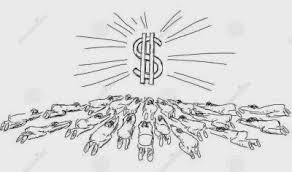
THE IDOLATRY OF MONEY

idol

by Cesar Aguirre

At Casa Maria we have been studying The Joy of the Gospel by Pope Francis and I have been lingering on some of the discussions we’ve had in our book study group on Thursdays. Last week we discussed the first three chapters of the book. Thanks to Msgr. for challenging us with his thought provoking questions. Like he said, “it’s not enough time to discuss in an hour, we need to revisit the parts that speak to us and study.”

I was asked to give my thoughts on this quote, “The worship of the ancient golden calf has returned in a new and rude disguise in the idolatry of money.” I went on somewhat of a rant about how money is more important than human life. How poor people are often seen as less human. How they are seen as lazy or worthless, but most times are the hardest workers out there and struggle through the worst of hardships.

As I reflect I realize that I really didn’t answer the question. It was answered for me.

The next question Msgr. got us thinking about was, “The dignity of each human person and the pursuit of the common good are concerns which ought to shape all economic policies.” Do these concerns shape economic policies? If not, what does? The piloto, Dennis Shannon said no, currently they don’t. He went on to say that this was a conversation that he has had with many people and there are many different perspectives on how our economy should work. The way our economy works now is based on money and revolves around profit. He asked “how can we create an economy that’s concerned with the common good and the dignity of each human person when we need money, without money our world can no longer function.

Through reflection I realized that he actually answered the question I tried to answer. In his response was the answer to the question which I had just tried to answer before him in my off topic rant. That is the worship of the ancient sacred cow in disguise. I was trying to make the point that we put money over human life, but more than anything the idolatry of money is in the fact that we truly believe that we NEED money in order for our world to function. The belief that without money our world and the people in it could not continue or survive.

I believe that this hoax is one of the greatest perils of mankind and it dominates our every thought and action in life. Once we are able to let go of this false idol, and only then, can we truly begin to create an economy that is based on “the dignity of each human person and the pursuit of the common good,” because the driving factor would no longer be profit, money, but rather human.


THE HOLY FATHER AND EVO MORALES

thth 1


Here are two different analysis, one in English and one in Spanish , in this historic meeting of two of the world’s most inspiring and important leaders.


POPE-MOVEMENTS Oct-28-2014

Pope urges activists to struggle against ‘structural causes’ of poverty

By Francis X. Rocca

Catholic News Service

VATICAN CITY (CNS) — Pope Francis urged an international gathering of grassroots social activists to struggle against the “structural causes” of poverty and inequality, with a “revolutionary” program drawn from the Gospels.

“The poor no longer wait, they seek to be protagonists, they organize, study, work, demand and, above all, practice that special solidarity that exists among those who suffer, among the poor,” the pope said Oct. 28, to a Vatican-sponsored World Meeting of Popular Movements.

The pope said solidarity entails struggling “against the structural causes of poverty, inequality, the lack of work, land and shelter, the denial of social and labor rights,” and confronting what he called the “empire of money.”

Most of what the pope said recalled his earlier statements on social justice, especially his November 2013 apostolic exhortation, “Evangelii Gaudium” (“The Joy of the Gospel”), but he delivered the remarks with a strong note of personal encouragement to the activists, telling them: “Today I want to join my voice to yours and accompany you in your struggle.”

Pope Francis said Catholic social teaching defines “land, shelter and work” as “sacred rights,” yet “if I speak of this some people conclude that the pope is a communist.

Deploring the displacement of his “brother peasants” from their “native soil,” the pope warned that traditional rural life is at “risk of extinction.” He also said “financial speculation” on food prices was to blame for the starvation of millions around the world.

“I’ve said and I repeat: a home for every family,” Pope Francis said. “Family and shelter go hand in hand.”

Scorning terms such as “homeless people” as euphemisms, the pope said that, in general, “behind a euphemism lies a crime.”

The pope called for urban planning based on the “authentic and respectful integration” of different communities, and criticized real estate developers who demolish the “poor settlements” typical of cities in underdeveloped countries.

Every neighborhood should have “adequate infrastructure,” include sewers, streets and recreational facilities, he said.

Pope Francis reiterated his earlier criticisms of rising youth unemployment, in Europe and elsewhere, as reflective of a “throwaway culture” that treats people as leftovers. Other examples, he said, include society’s neglect of the aged, low fertility rates, malnourished children and abortion.

Noting that he was addressing representatives of non-unionized workers such as trash pickers, street peddlers and artisans, the pope said “every worker, whether or not part of a formal system of salaried work, has the right to a decent wage, social security and a pension plan.”

The pope said social justice also requires peace and environmental protection, both of which the global economic system inevitably threatens.

“There are economic systems that must make war in order to survive,” he said. “An economic system centered on the god of money also needs to plunder nature, plunder nature, in order to maintain the frenetic pace of consumption inherent in it.

Pope Francis said that he was writing an encyclical on ecology, and promised the activists that the document would reflect their concerns.

The pope acknowledged that the activists sought to replace the current economic and political system with one based on “human dignity,” but warned them to avoid destructive extremism in the process.

“It must be done with courage, but also with intelligence; with tenacity, but without fanaticism; with passion, but without violence,” he said, and recommended that social movements take their “guide of action,” from the Gospels, specifically the beatitudes and the 25th chapter of Matthew, in which Jesus says: “whatever you did for one of these least brothers of mine, you did for me.”

At the end of his speech, which lasted more than half an hour, the pope gave the more than 150 activists rosaries he said had been made by “artisans, trash pickers and workers from the popular economic of Latin America.”

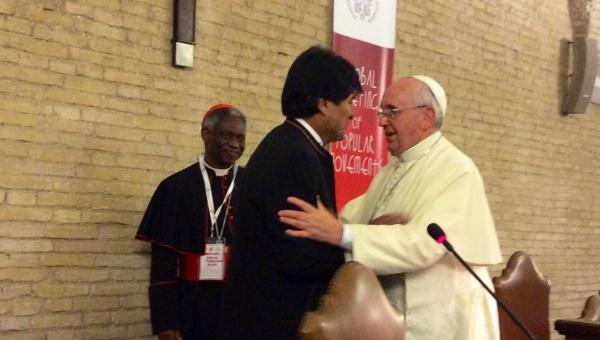
In the audience was Bolivian President Evo Morales, an outspoken and controversial critic of globalization, who the Vatican noted was attending not as a head of state but as the leader of a grassroots social movement. Morales was scheduled to meet informally with Pope Francis later the same day.

END


_________________________

En presencia del presidente Evo Morales

Encuentro mundial de movimientos populares: una jornada histórica en el Vaticano

Vaticano 27-29/X/14

Ignacio Ramonet

Rebelión

El martes 28 de octubre ha sido una jornada histórica.

Primero porque no es frecuente que el Papa convoque, en el Vaticano, a un Encuentro Mundial de Movimientos Populares en el que participan organizaciones de excluidos y marginados de los cinco continentes, y de todos orígenes étnicos y religiosos: campesinos sin tierras, trabajadores informales urbanos, recicladores, cartoneros, pueblos originarios en lucha, mujeres reclamando derechos, etc… En suma, una Asamblea mundial de los pobres de la Tierra. Pero de los pobres en lucha, no resignados.

Segundo, es menos frecuente aun que el Papa se dirija directamente a ellos, en el Vaticano, diciéndoles que quiere “escuchar la voz de los pobres” porque “los pobres no se conforman con padecer la injusticia sino que luchan contra ella” y que él (el Papa) “los quiere acompañar en esa lucha”. También ha dicho Francisco que “los pobres ya no esperan de brazos cruzados por soluciones que nunca llegan; ahora los pobres quieren ser protagonistas para encontrar ellos mismos una solución a sus problemas” pues “los pobres no son seres resignados, sino protestan” y su protesta « molesta ». Ha dicho que espera que “el viento de la protesta se convierta en vendaval de la esperanza”. Asimismo ha afirmado el Papa: “La solidaridad es una forma de hacer historia”. Y por eso se une al pedido de los pobres que reclaman “tierra, techo y trabajo”, Y ha añadido: “Cuando pido para los necesitados tierra, techo y trabajo, algunos me acusan de que ‘el papa es comunista’! No entienden que la solidaridad con los pobres es la base misma de los Evangelios.”

También ha afirmado Francisco: “La reforma agraria es una necesidad no sólo política sino moral!” Y ha acusado (sin nombrarlo) al neoliberalismo de ser la causa de muchos de los males de hoy: “Todo esto ocurre -ha afirmado- cuando se saca al ser humano del centro del sistema y que en ese centro está ahora el dinero.” “Por eso hay que alzar la voz”, ha repetido. Y ha recordado que “los cristianos tenemos un programa que me atrevería a calificar de revolucionario: las bienaventuranzas del ‘Sermón de la Montana’ del Evangelio según San Mateo.”

Un discurso fuerte, valiente que se inscribe en el filo directo de la Doctrina Social de la Iglesia que el papa ha reivindicado explícitamente. Y en la opción preferencial por los pobres. Hacía mucho tiempo que un Papa no pronunciaba un discurso tan social, tan “progresista” sobre un tema, el de la solidaridad con los pobres, que constituye la base misma de la doctrina cristiana.

Tercero. Todo esto ha sido tanto más importante cuanto que este discurso, el Papa lo ha pronunciado en presencia del Presidente de Bolivia Evo Morales, icono de los movimientos sociales y líder de los pueblos originarios. Un momento más tarde, el Presidente Morales, muy aplaudido, ha tomado la palabra ante el mismo auditorio de movimientos populares en lucha para explicar, con muchos ejemplos, que “el capitalismo que todo lo compra y todo lo vende ha creado una civilización despilfarradora”. Ha insistido en que “hay que refundar la democracia y la política, porque la democracia es el gobierno del pueblo y no el gobierno de los capitales y de los banqueros”. También ha puesto el acento en que “hay que respetar a la Madre Tierra” y oponerse a que “los servicios básicos sean privatizados”.

Ha sugerido a todos los Movimientos Populares aquí reunidos que creen “una gran alianza de los excluidos” para defender los “derechos colectivos”.

El sentimiento general de los participantes, en este inédito Encuentro, es que estas dos intervenciones confirman el enorme liderazgo político y moral, a escala internacional, del Presidente Evo Morales; y el nuevo rol histórico del Papa Francisco, como abanderado solidario de las luchas de los pobres de América Latina y de los marginados del mundo.

Rebelión ha publicado este artículo con el permiso del autor mediante una licencia de Creative Commons respetando su libertad para publicarlo en otras fuentes.


Bolivian President Evo Morales Speaks at Vatican’s International Gathering of Popular Movements (Why didn’t the Daily Star cover this, was this in the New York Times?)

moralesypapa_jpg_1718483346

Bolivian President Evo Morales is greeted by Pope Francis at a gathering held at the Vatican on October 28, 2014. (Photo: Bolivian Government Palace Press)

Pope Francis and President Morales coincide on need to defend rights of the marginalized.

Bolivian President traveled to the Vatican today to participate in the first International Gathering of Popular Movements. The gathering was organized by the Pontifical Council of Justice and Peace and brings together 200 representatives from popular organizations and movements from throughout the world.

President Morales attended the gathering in his capacity as an Indigenous person and leader and centered his remarks on the need to defend Mother Earth. In his speech Morales said “We cannot allow the capitalist system to turn the land into a mere system,” adding that the planet can survive without humans but we cannot survive without the planet. The Bolivian President also said that the concentration of land is in the hands of the few and that this “is the source of all social injustices.”

Pope Francis opened the gathering and called for land and work for the poor and the marginalized in his remarks, adding “We want your voices to be heard that in general go unheard… perhaps because people are afraid of the change you demand.” The pope emphasized the right to housing, in particular, saying “We live in cities where towers, shopping malls are built, where they make business in real estate but they abandon those on the margins, on the peripheries. It hurts to hear that they marginalize the poor settlements or worse still, want to eliminate them.”

Pope Francis also celebrated the movement of the popular masses, saying “Then you can really feel the winds of change that invigorates the idea of a better world.” Morales affirmed the Pope’s statements and called for land, work, and housing to be recognized as human rights.