March 4, 2014

Cesar Chavez

by Brian Flagg,

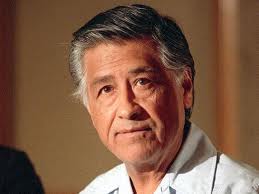
Tonight the Tucson City Council will vote on whether to adopt Cesar Chavez’s birthday as the 11th official paid holiday for city employees.

We at Casa Maria wrote a letter of support. Cesar Chavez is our hero. I even met him once.

But how can City Council members vote to institute a holiday for Cesar Chavez, the beloved labor leader and founder of the United Farm Workers Union, and at the same time, in the same budget cycle, vote to balance their budget on the backs of poor bus riders?

Voting to economically oppress poor people, while at the same time, paying homage to Cesar Chavez would be very hypocritical.  Cesar Chavez would turn over in his grave.

REST ASSURED THAT, ONE WAY OR ANOTHER, THE TUCSON BUS RIDERS UNION WOULD MAKE THIS A LARGE ISSUE IN NEXT YEARS CITY COUNCIL ELECTION!

__________________________________________

por Brian Flagg,

Esta noche el Ayuntamiento de la Ciudad de Tucson votara en favor o en contra de adoptar el cumpleaños de Cesar Chávez como el onceavo feriado pagado para los empleados de la ciudad.

Nosotros en Casa María escribimos una carta de apoyo. Cesar Chávez es nuestro héroe. Yo incluso lo conocí una vez.

¿Cómo es posible que los miembros del Concilio de la Ciudad piensen en instituir un día feriado en nombre de Cesar Chávez, el amado líder y fundador del Sindicato de Trabajadores Agrícolas, y a la vez, y en el mismo ciclo presupuestal, votar en favor de balancear el presupuesto de la ciudad en las espaldas de los pasajeros del camión que son pobres?

El votar para que económicamente se oprima a la gente pobre, mientras que al mismo tiempo, se honre a Cesar Chávez sería muy hipócrita. Cesar Chávez estaría retorciéndose en su tumba.

¡TENGAN POR SEGURO QUE DE UNA MANERA U OTRA, EL SINDICATO DE PASAJEROS DEL CAMION DE TUCSON, HARA DE ESTO UN IMPORTANTE TEMA DURANTE LAS PROXIMAS ELECIONES PARA EL CONCILO DE LA CIUDAD!

ANITA TIMPANI: STILL WORKING ON THE REVOLUTION!

Anita

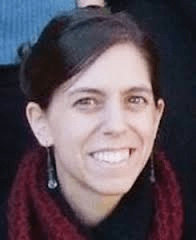
When Anita Timpani lived in Tucson and volunteered at Casa Maria she was really helpful because she actually used her Masters degree in theology from Gonzaga University to inspire us and help us think about what it means to be Catholic.

She got married, is going to have a baby and now lives in North Carolina.

She continues to inspire by sending us this article on why it’s so great to be a Catholic!

Thanks Anita!

It’s titled “12 Awesome, Radical Catholic Ideas,” by Nathan Schneider from “The Daily Beast

Click on the link:

http://news.yahoo.com/12-awesome-radical-catholic-ideas-104500750–politics.html?soc_src=copy

Yo’ Daily Star, What’s your beef with H.T. and TUSD?

by Cesar Aguirre

As I looked at today’s headlines I could not help but feel somewhat discouraged and deflated, which was the total opposite of how I felt last night. Yesterday I spent my day at the Strategic Planning Session, an all-day discussion to begin the planning of the future of TUSD. Afterwards I felt full of hope and optimism because for the first time I felt that the broader Tucson Community was finally being asked to be part of the rebuilding of the district. This morning’s headline on the front page of the Arizona Daily Star read, “Ground is familiar at TUSD’s $92K event Consultants give no new info but help to spur discussion” (2/26/2014).

As I read the article I quickly noticed the attack on the district, which also happened to be one of the topics discussed yesterday. In the second line of the story the amount spent is emphasized again and the article attempts to discredit the planning session by stating that the consultants hired did not tell leaders in the district “anything they didn’t already know or that hasn’t been said before.” What the article fails to mention is that the purpose and intent of the consultants was not to give us answers, but rather to look at creative and innovative models across the country and challenge the Tucson Community to think about how we can move forward together as a school district. Dr. Sanchez has said repeatedly that he does not know everything, especially when it comes to “what’s in the minds and hearts of this community,” and when talking to him after the session he said something that really resonated with me. He said that in order to have anything truly sustainable it needs to come from the ground up, not from the top down. Ever since becoming deeply involved with my children’s education all I can ever remember is the top down decisions, policies and pressures put on TUSD schools, educators, and families in order to try and “fix” public education.

I believe what has been missing in public education is the public. Yesterday, for the first time, I looked around the room and saw community members of all colors, cultures, and classes engaged in conversation around how to make TUSD better for ALL of Tucson’s children. At the table I was at we discussed how standardized testing does not provide educators with the meaningful information they need in order to know how well our children are doing or how the students learn. Also we discussed how to transform the spaces in our existing facilities in order to encourage collaboration, discussion, and critical thinking rather than your traditional desks in a row classroom. We discussed the importance of building relationships, of a well-rounded education, of identity and access to the study of all cultures. Many great ideas were generated and we discussed many other things, but the one thing that was at the top of our list was the public’s perception of TUSD schools.

tusd_black

It was mentioned many times that the only things being highlighted by the Star are negative, and even when the district, or TUSD schools, do great things it is ignored or somehow twisted into something negative by the media. For the first time TUSD has called on the community to work with them, side-by-side to improve our children’s education, and yet the Star has failed to include that in the article. As the session came to a close H.T. Sanchez said that he would be wasting our time if this strategic planning session wasn’t followed up on. He then laid out concrete next steps and even urged the group to hold him accountable!

In closing, I will say that again I feel pumped up and full of hope that TUSD will continue to work with the community to improve public education in Tucson!

The families that Casa Maria serves can’t afford a private Catholic education!

by Jimmy Ojeda,

At Casa Maria we have been working with parents, teachers, students and community members in support of a quality education for all our children.

We have played a significant role in keeping the schools in our barrio open. There is nothing more important than quality public education in regards to liberation of barrio families mired in poverty.

Dr. Andrea Romero, Ph.D., Associate Professor
Academic Program of Family Studies and Human Development
Mexican American Studies & Research Center has worked extensively in our barrio in recent years. She has played an integral role in the struggle for quality education in our barrio. She founded La Zona de Promesa which is a group working for excellent education from cradle to college.

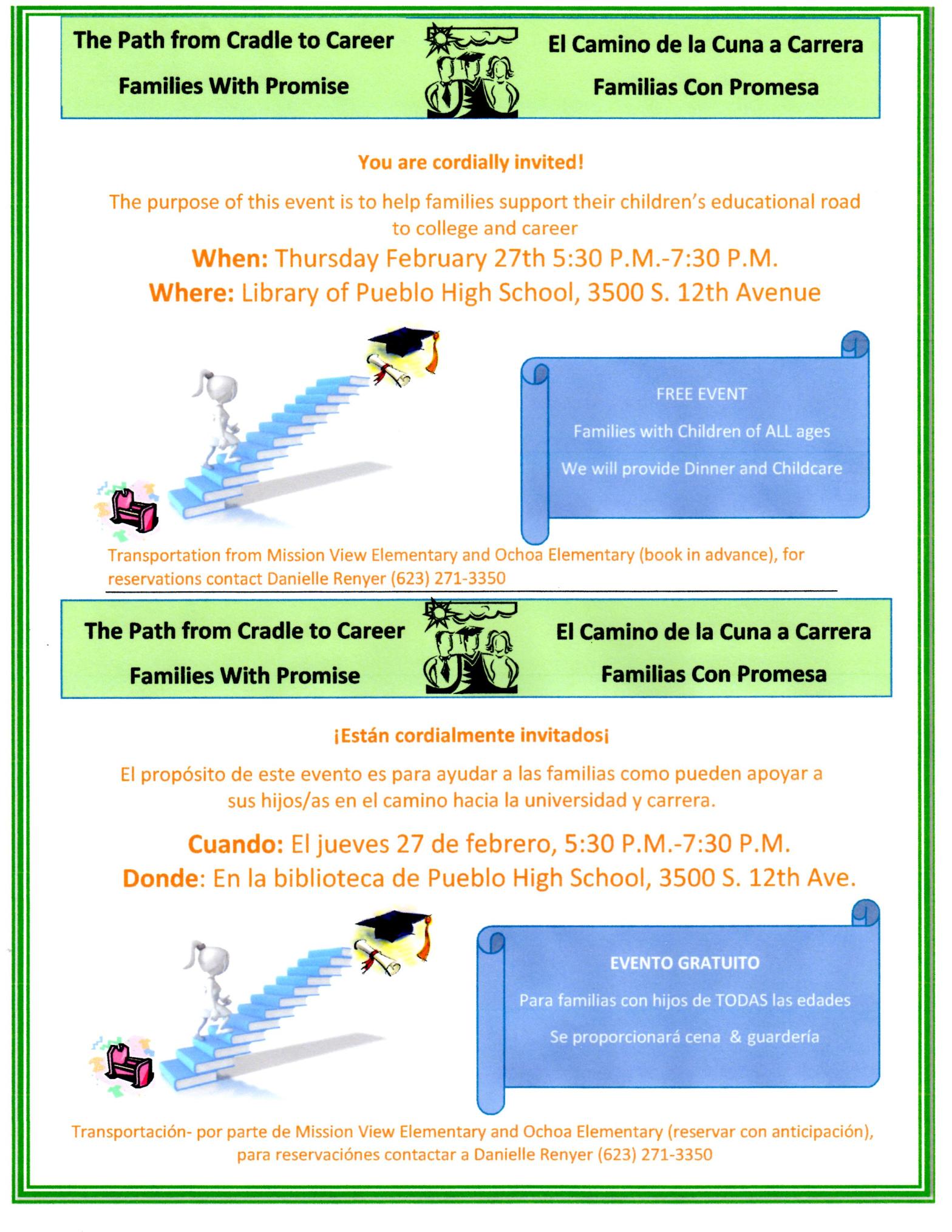
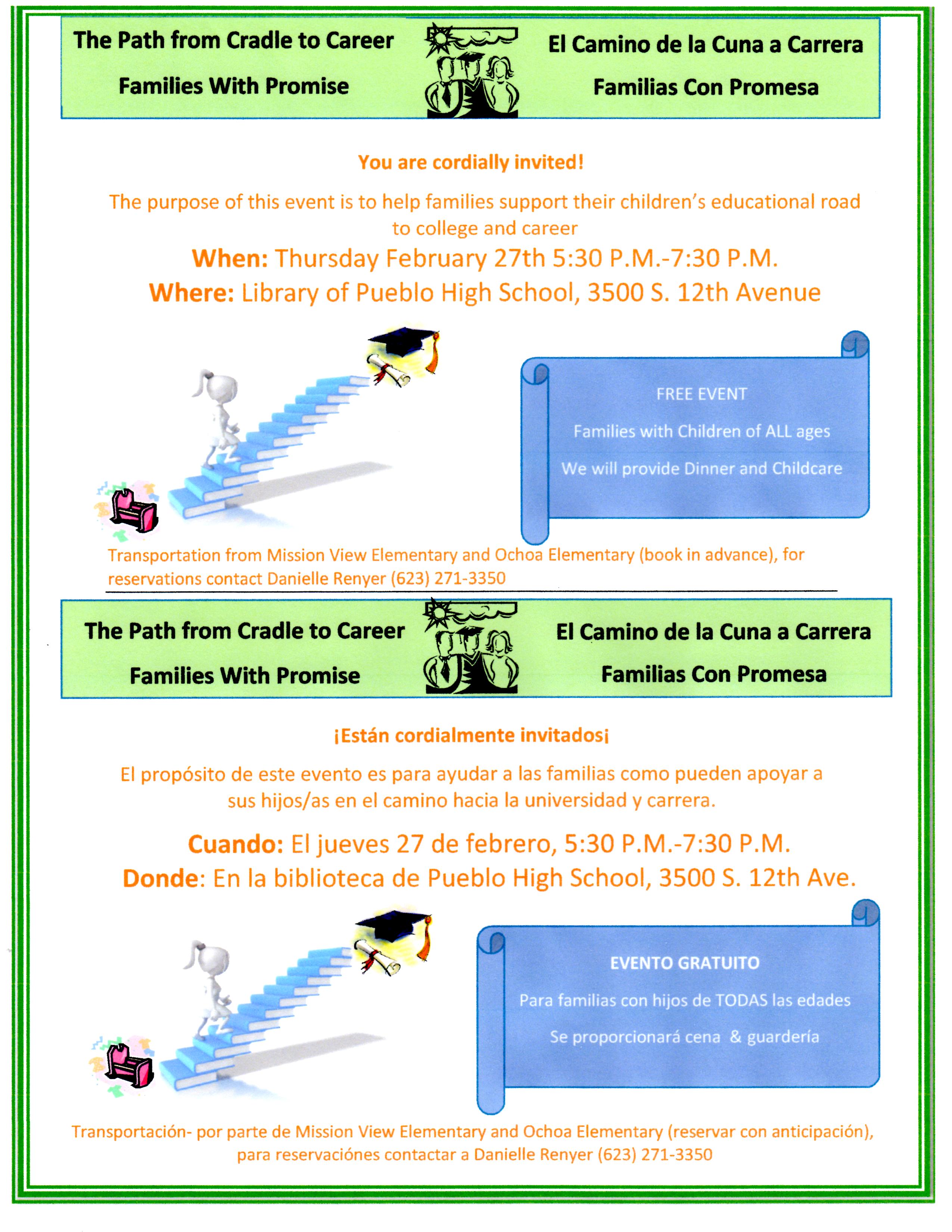
Casa Maria invites you and your family to join us on Thursday, February 27th from 5:30 – 7:30 p.m. at the Family Cradle to College Night at Pueblo High School.

Chicken fajitas will be served and there will be several workshops, including “Advocating for your Child”, by Cesar Aguirre and me, Jimmy Ojeda.

img004

A letter to the Mayor

IMG_1417

by Suzanne Shafer

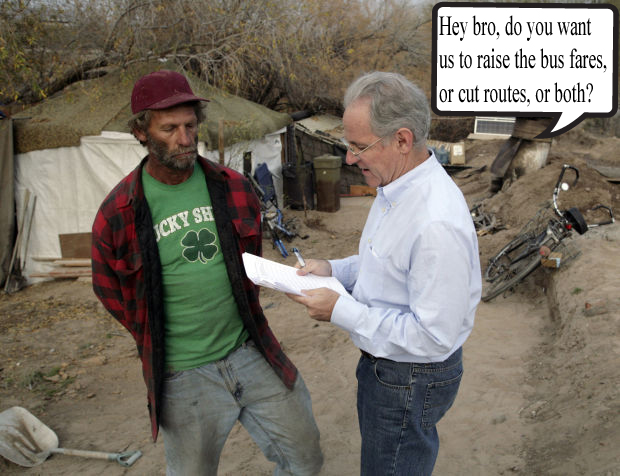
This is an excerpt from a letter sent last week by Suzanne Shafer form the Bus Riders Union to Mayor Rothschild regarding this lame concept the bureaucrats refer to as “elasticity.”

From letter to Jonathan Rothschild 02-18-2014,

. . . how is the projected increase in revenue from fare increases being calculated? How much of this “hole” is it expected to fill?

. . . When I asked for the origin of the elasticity model used to estimate the effects of fare changes, Sun Tran staff didn’t know the answer. But several weeks later I got the reply from Mary McLain: “The industry model used is based upon a paper, entitled ‘Fare Elasticity
and Its Application to Forecasting Transit Demand,’ published in August 1991 by the American Public Transit Administration.”

Numerous literature reviews since 2004 have pointed out the shortcomings of this model, which is based on short-range studies of limited size conducted mostly in the 1970s and 80s. It’s a poor fit in today’s world where more people own cars, more are concerned about their carbon footprint, and bus fares take a higher portion of one’s income; where young people are less inclined to drive and older people are more numerous.

The old model tends to understate the long-term effects of fare increases on ridership, and to under-predict the pollution/congestion benefits of transit use. Price sensitivity is higher over the long term (over a period of five years, elasticity approaches 1.0, i.e., you can lose as much as you gain). It’s also higher at higher fares. So the next fare increase will likely have a greater negative impact on ridership than the last one. And it’s higher among riders who are not dependent on transit alone–the ones we all say we want to attract.

At the same time, we’re trying to shift riders to a new payment system (when riders were surveyed in September for the COA, the preferred payment mode was still cash) that, if widely used, will save operating costs and yield a great deal of useful data; introduce and integrate the modern streetcar; and adjust routing and schedules—meanwhile continuing to do a lousy job of communicating our service to new or occasional users. Raising the price of the service–and cutting frequency when increased frequency is the top rider-requested improvement–will only exacerbate the ridership losses.

Therefore we have no idea what will be the actual impact (+ or -) of fare increases on Sun Tran’s bottom line. But we can predict other impacts, if not their magnitude. Less spending money for riders. Less mobility for non-drivers; more cars on the road. More of a family’s
budget spent on transportation, whether it’s gas or bus fares. Work shifts missed. Young folks staying home. Parents skipping errands. These are things that shrink the economy.

. . . . TDOT marginalizes the bus system in every way. Why is parking
sold and managed by one agency that uses all the city communication channels available (slick ads by DTP, plenty of slots for brochures in the kiosk at City Hall where I can’t find a Ride Guide, a spiffy office open longer hours than the transit services office, notices about where to park on every jury summons and event flyer and ad infinitum) while the transit agency has a largely useless website, a tiny marketing budget, and no imagination?

The good ideas are out there; please stop threatening the bus system we have so we can focus our energies on helping you sell it to more Tucsonans, increase the proportion of riders paying the regular fare, thereby increasing revenue and improving the system along with everyone’s quality of life!

The Tucson community is HOT For Transit Justice!

IMG_1452IMG_1453

IMG_1464 IMG_1465

by Brian Flagg,

You don’t believe me? You should have been at last night’s (Wed. 2/19) City Council Meeting!

More than 200 people showed up to say to the Council: DON’T RAISE BUS FARES – DON’T BALANCE YOUR BUDGET ON THE BACKS OF TUCSON BUSRIDERS LIVING IN POVERTY!

This event was sponsored by the Tucson Bus Riders Union and a good time was had by all.

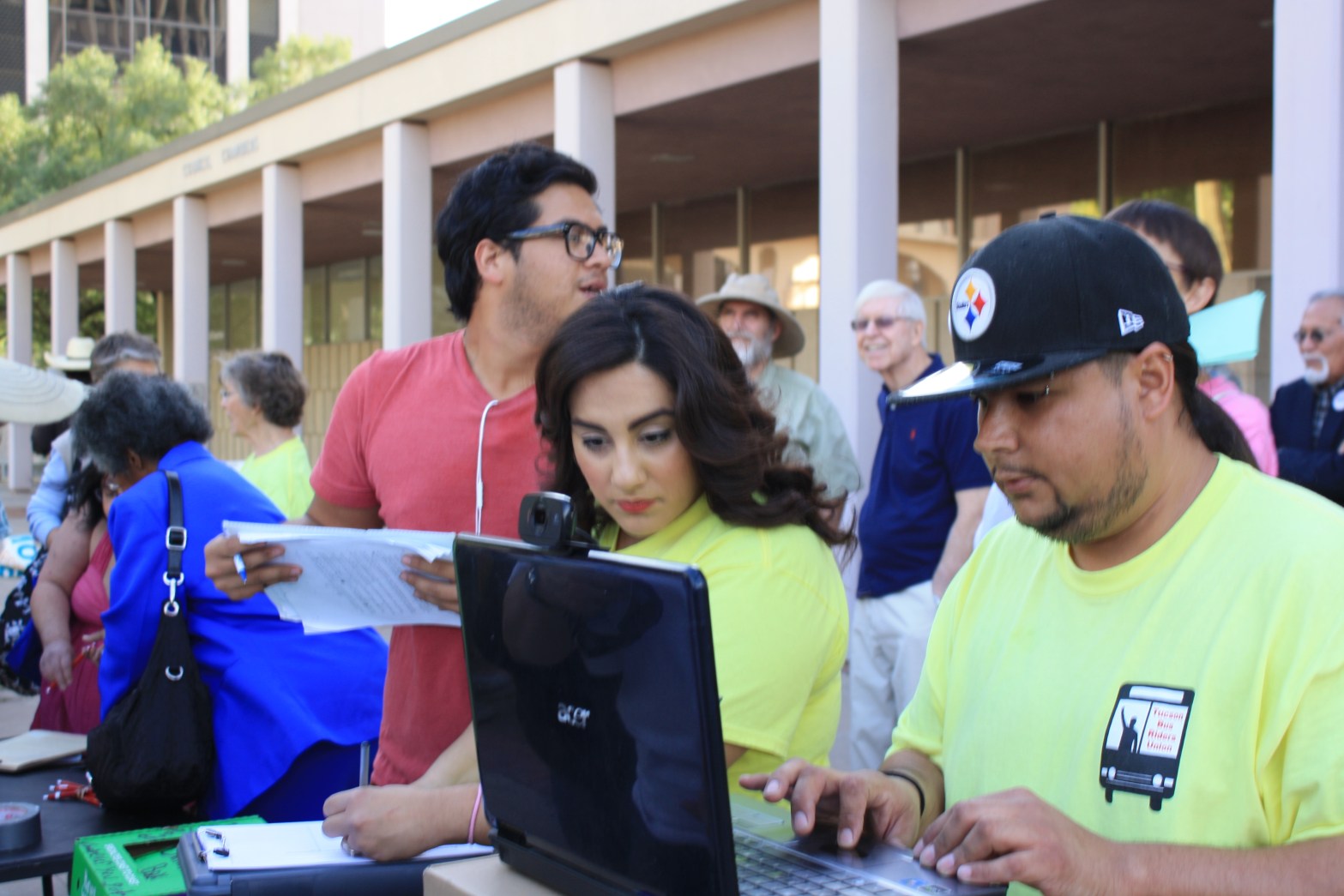
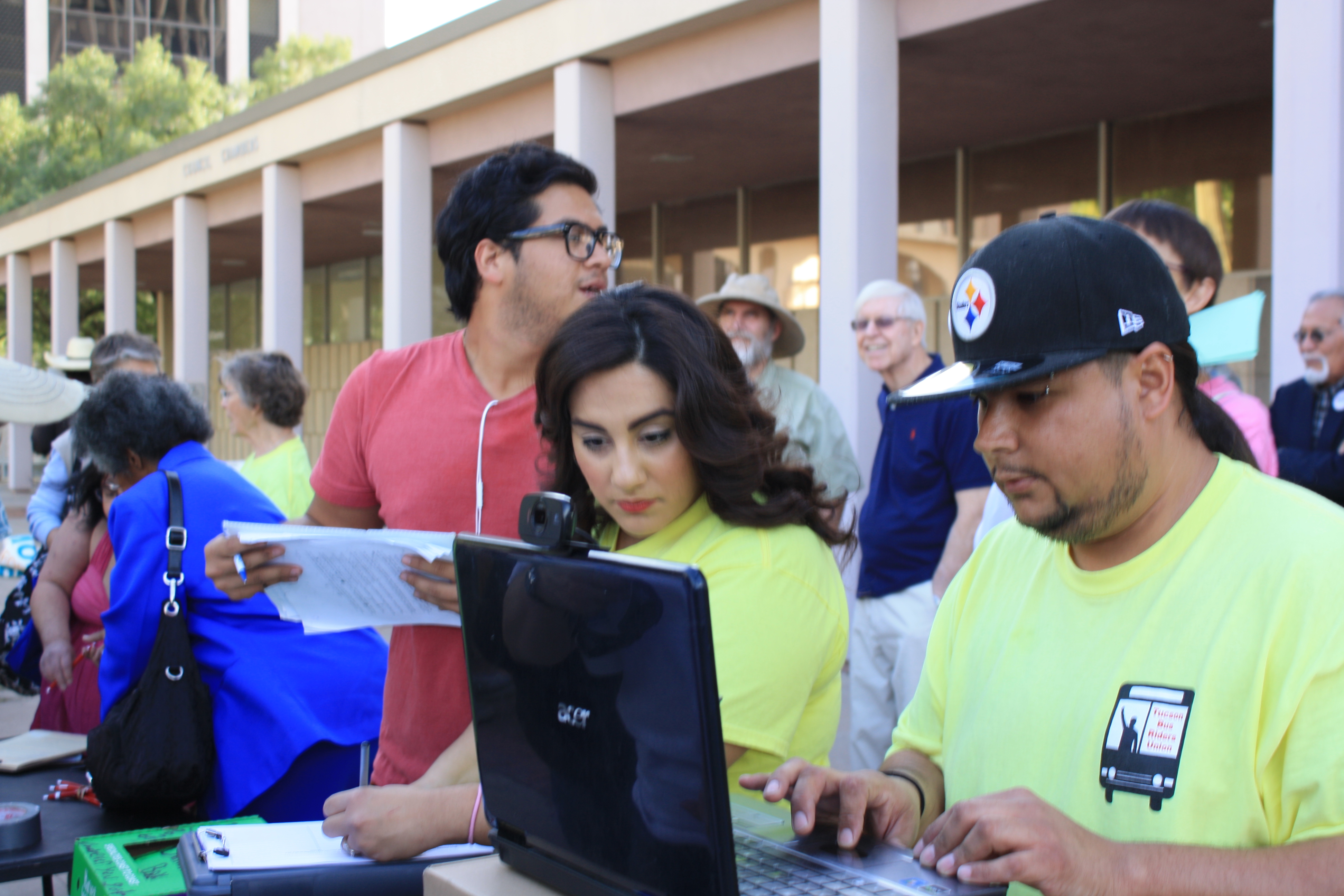
One hundred more bus riders signed up for the Union. They received an official laminated TBRU membership card with their pictures in addition to bright yellow TBRU t-shirts (thanks to Dwight Metzger and The Gloo Factory). The birria, rice and beans whipped up by las chicas de Casa Maria was delicious. And 25 monthly bus passes were raffled thanks to a donation from our good friend Roger Clifton.

The good part of the meeting was Councilwoman Karen Uhlich leading all the other council members against the transit bureaucrats’ insulting and insincere plan to slash $4 million from the transit budget by decreasing the frequency of buses on almost all the routes.

The bad part of the meeting was the 5-2 vote to balance the budget on the backs of poor bus riders by raising fares. So now there will be public hearings that the Feds say must take place before these fare increases are implemented. Stay tuned!

Richard Fimbres and Karen voted against the fare increase. Karen boldly told her colleagues: “I think it’s important to put staff and management on notice that I think fare increases should be the last resort for balancing our budget, not the first as it seems to have been the last five years.”

As reported in the Daily Star (2/20/14) she said she “felt the numbers provided by the staff were too conservative and said the gap would likely be much smaller once all the actual figures are calculated.”

Karen’s colleagues, save for Richard, need to be enlightened.

What this award-winning bus system needs is more ridership and studies show that fare increases drive down ridership, thus decreasing revenues.

They also need to realize that three of them, Romero, Cunningham and Rothschild are up for re-election in 2015. The overwhelming Democratic voters of Tucson are a generous and compassionate bunch who won’t be excited about voting for Democratic politicians who needlessly increase the suffering of poor people.

They need to be very clear that the Bus Riders Union, in one way or another, intends to make this a major issue in the next election .

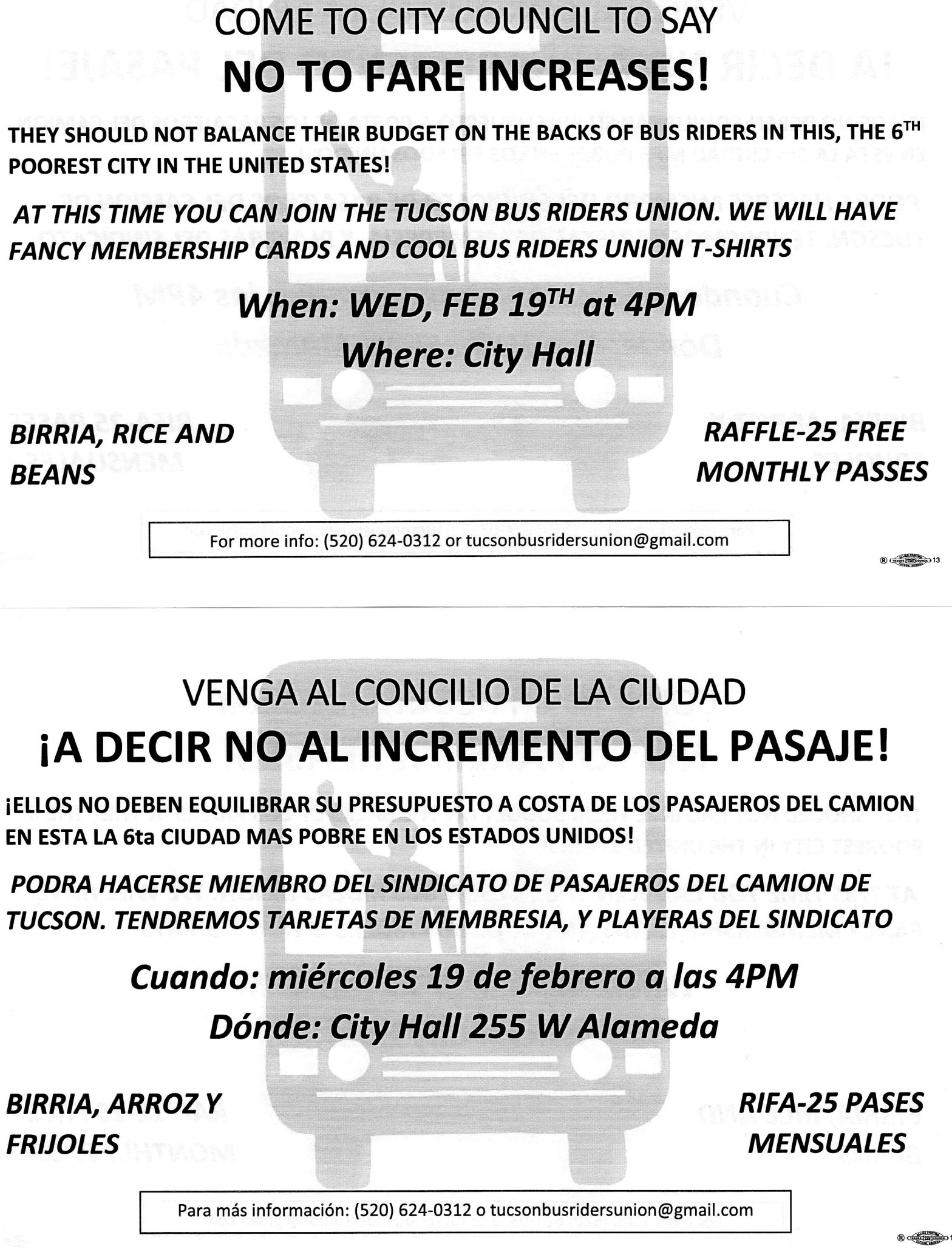
FAMILY, FRIENDS AND SUPPORTERS OF CASA MARIA AND THE TUCSON BUS RIDERS UNION PLEASE JOIN US ON WED. FEB. 19TH AT 4PM AT CITY HALL TO SAY NO TO FARE INCREASES!

Come to city council to say NO TO FARE INCREASES! The city should not balance the city’s budget on the backs of the Bus Riders in this, the 6th poorest city in the United States. Come Join the Tucson Bus Riders Union on Feb. 19th and get your official membership card and a Tucson Bus Riders Union T-shirt. There will be mouth-watering food and raffles for free monthly bus passes. Also, please check out Brian’s Op-ed in the Arizona Daily Star on the subject to be better informed (http://azstarnet.com/news/opinion/brian-flagg-tucson-has-a-moral-imperative-not-to-raise/article_821ed785-8e70-5a71-8fe8-d484f718a827.html).
img005

Raising Bus Fares is a Moral Issue

Brian Flagg

by Brian Flagg,

On Wednesday, February 19, the Tucson Mayor and Council will decide whether to raise bus fares. The fare would go from $1.50 to1.7 5 and the low income fare from .50 to .65. A monthly pass would go from $26 to $43. They will also decide whether to cut routes.

This might not seem like much to some people, but for families mired in poverty who come to places such as Casa Maria and the Food Bank to beg for food to feed their kids, it’s a big deal. People simply cannot afford it.

In a recent Ward 3 Newsletter, Councilwoman Karen Uhlich quoted ex-Mayor George Miller saying that a budget is a moral document because it spells out the values of the Council and the people they represent.

How true.

Thus it would be immoral for the City Council to raise the bus fares. This would be balancing the budget on the backs of poor people who are already suffering from poverty in this, the city with the eighth worst poverty rate in the entire country.

It would also be hypocritical.

The City and especially Mayor Jonathan Rothschild talk much about poverty. But the only thing they can really do about it with the discretionary funds they have, their General Fund, is to protect bus riders.

The City Manager claims the City is facing a $32 million budget deficit this year.

But in December The Council voted $3.5 million in step raises for management in police and fire. These are already many of the highest paid employees in the City. Many of them already make more than $100,000 a year.

$200 million is being spent on the street car with the City kicking in $30 million, not to mention the $4-6 million a year it costs to maintain and operate it.

Last week the Council gave $760,000 for repairs to the Tucson Convention Center.

In the last year, $13 million worth of incentives were given away to developers to develop downtown.

And the list goes on and on.

Raising bus fares is not just a moral issues, it’s also about common sense, economic development and the environment.

Tucson has an award winning bus system. This is in large part due to a 25% fare box recovery. Many similar sized cities have fare box recoveries that hover around 18%. This indicates that Tucsonans do use the bus, both because they must use it to survive but also because it’s a good system that works.

Statistics show that ridership goes down when fares are increased. What we need in Tucson is increased ridership which will produce more revenue.  Raising fares works against increased ridership. Because of climate change and in response to any future jumps in oil prices, using the bus becomes increasingly important for the survival of both the planet and the people.

My experience is that the people of Tucson are generous, compassionate and relatively moral. We tend to not elect mean-spirited politicians such as Joe Arpaio or many of the state legislators from the Phoenix area and other parts of the state.

The Mayor and Council need to realize that not balancing the budget on the backs of poor people will resonate positively with the voters of the City of Tucson.

If the Spirit moves you, contact the Mayor and members of the City Council to ask them to not raise fares. Members of the Tucson Bus Riders Union will be out in force at the Council meeting on February 19th. Please join us.

Brian Flagg has lived and worked at the Casa Maria Soup Kitchen for the last thirty years, and is a member of the Tucson Bus Riders Union.

Contact him at casamariatucson@yahoo.com

_______________________________________

por Brian Flagg,

El miércoles 19 de Febrero, el Alcalde y los representantes de Ayuntamiento  de Tucson decidirán si se aumenta o no las tarifas del camión. Las tarifas irían de $1.50 a $1.75 y las tarifas económicas subirían de .50 a .65 centavos. El pase mensual subiría de $26 a $43 dólares. Ellos también decidirán si se hará un recorte en las rutas.

Esto pareciera no ser de mucha importancia para algunas personas, pero para familias pobres, las cuales vienen a Casa María y al Banco de Alimentos a mendigar por alimentos para darle de comer a sus hijos, es de mucha importancia. Las personas simplemente no tienen los recursos.

En un reciente boletín informativo del Distrito 3, la Concejala Karen Uhlich cito al ex -alcalde  George Miller diciendo que un presupuesto es un documento moral porque deletrea los valores del Ayuntamiento y a las personas a las que representa.

Muy cierto.

Por lo tanto, sería inmoral que el Ayuntamiento de la Ciudad incremente las tarifas del camión. Esto sería balancear el presupuesto en las espaldas de los pobres, los que ya están sufriendo de pobreza en esta la ciudad con el sexto  peor porcentaje de pobreza   en todo el país.

Esto también seria ser hipócrita.

La Ciudad y en especial el Alcalde Jonathan Rothschild hablan mucho sobre la pobreza.  Pero la única cosa que en realidad pueden hacer al respecto con los fondos discrecionales que tienen, los fondos generales, es proteger a los pasajeros del camión.

El Administrador de la Ciudad está enfrentando un déficit presupuestal de $32 millones de dólares este año.

Pero en Diciembre el Ayuntamiento aprobó $3.5 millones en aumento de salaries para los administradores de la policía y los bomberos. Muchos de ellos ya son de los mejores trabajadores pagados en la ciudad. Muchos de ellos ya ganan más de 100,000 dólares al año.

$200 millones de dólares son gastados en el tranvía con la ciudad poniendo $30 millones de dólares, sin mencionar los $4-6 millones al año que cuesta para su mantenimiento y operaciones.

La semana pasada el Ayuntamiento dio $760,000 dólares para reparaciones al Centro de Convenciones de Tucson.

En el último año, $13 millones de dólares en incentivos fueron otorgados a desarrolladores  para desarrollar el centro de la ciudad.

Y la lista continúa.

El incrementar las tarifas del camión no solo es un tema moral, también se trata de sentido común, desarrollo económico y el medio ambiente.

Tucson tiene un sistema de camiones que ha ganado premios. Esto en parte se debe al 25% de recuperación en las tarifas. Varias ciudades de similar tamaño tienen una recuperación de aproximadamente 18%.  Esto indica que los Tucsonenses usan el camión, porque lo necesitan para sobrevivir  y también porque es un buen sistema que funciona.

Las estadísticas muestran que el número de pasajeros que usan el camión disminuye cuando se incrementan las tarifas. Lo que necesitamos en Tucson es aumentar el número de pasajeros lo que producirá más ingresos. El incrementar las tarifas ve en contra de aumentar el número de pasajeros que usan el camión. Debido a los cambios climáticos y en respuesta a futuros incrementos en los precios del combustible, el usar el camión se vuelve más importante para la sobrevivencia de ambos el planeta y las personas.

Mi experiencia es que las personas en Tucson son generosas, compasivas y relativamente morales. Tendemos a no elegir políticos malintencionadas como Joe Arpaio o muchos de los legisladores estatales del área de Phoenix y otras partes del estado.

El Alcalde y el Ayuntamiento  necesitan dares cuenta que el no balancear el presupuesto en las espaldas de los pobres resonara positivamente con los votantes de la Ciudad de Tucson.

Si el Espíritu los conmueve, contacte al Alcalde y a los miembros del Ayuntamiento para pedirles que no incrementen las tarifas. Miembros del Sindicato de Pasajeros del Camión de Tucson estarán presentes con fuerza en la reunión del Ayuntamiento en 19 de Febrero. Por favor acompáñenos.

Brian Flagg ha vivido y trabajado en Casa María por los últimos 30 anos, y es miembro del Sindicato de Pasajeros del Camión de Tucson.

Contáctelo en casamariatucson@yahoo.com
BEING ON TV WAS FUN, NOW LETS GET REAL ABOUT PUBLIC EDUCATION

by Cesar Aguirre

Yesterday I was on AZ Illustrated talking about poverty. This is a very deep issue to discuss in an eleven minute interview. We weren’t even able to scratch the surface. The bus riders’ issues are very important to me and I was able to talk a little about how fare increases would afflict those who depend on Sun Tran for their daily transportation needs, many of whom live in poverty, but what I am really passionate about is public education. After a Bus Riders Union meeting last night I grabbed the paper and found a very interesting article on charter schools in the Tucson Weekly (http://www.tucsonweekly.com/tucson/danehy/Content?oid=3959459) which caused my brain to churn and got me thinking about how so many people are being misled about our current education system. Being a single parent of two highly intelligent, out of the box thinkers that are total opposites of each other I know that their success is dependent on the quality of education they receive. That being said I am a huge supporter of school choice. I believe in school choice for all!

The truth is there really isn’t much choice for most of the people who live in my barrio. There is a private Catholic school only two or three blocks from the public school my children attend. How many of the families in my barrio can actually choose to send their kids there. Not many, because if they could afford it they probably wouldn’t live in my barrio. Don’t get me wrong, this is by no means an attack on private education, but I believe private education should be just that, private. The term “school choice” has been used over and over again by politicians and policy makers to push the privatization of public schools. With charter school applications at an all-time high in Arizona, the passing of the state voucher system, the funding cuts for public schools at the state level (over a billion dollars in the last 5 years), the passing of unfunded mandates and pressure on educators to make students perform on tests that are culturally biased and measure only quantitive data rather than qualitive, our tax payer moneys are being funneled out of the classroom and into the pockets of the owners of charter schools, private schools and large corporations like Pearson and other standardized test makers. And now with the new assessments that require students to test on a computer coming soon, computer and software companies stand to make boatloads of money too, all paid for by our taxes.

I know that there are a few good charter schools out there but I don’t think that they are model schools for public education. Public schools should be held accountable to how tax dollars are spent, but public charters are an exception to the rule. They receive more tax dollars per student (after accounting for services regular public schools are required by law to provide like transportation and meals) but can manage those funds however they see fit, and they don’t even have to show the state how they spent it. No transparency. No accountability. No public control. Please read the article cited above and do some deeper research in order to spread consciousness on this subject. All of America’s children deserve a high quality education!